Imagine being a young comedian performing in a small Miami Beach nightclub.
Suddenly, Frank Sinatra walks through the door.

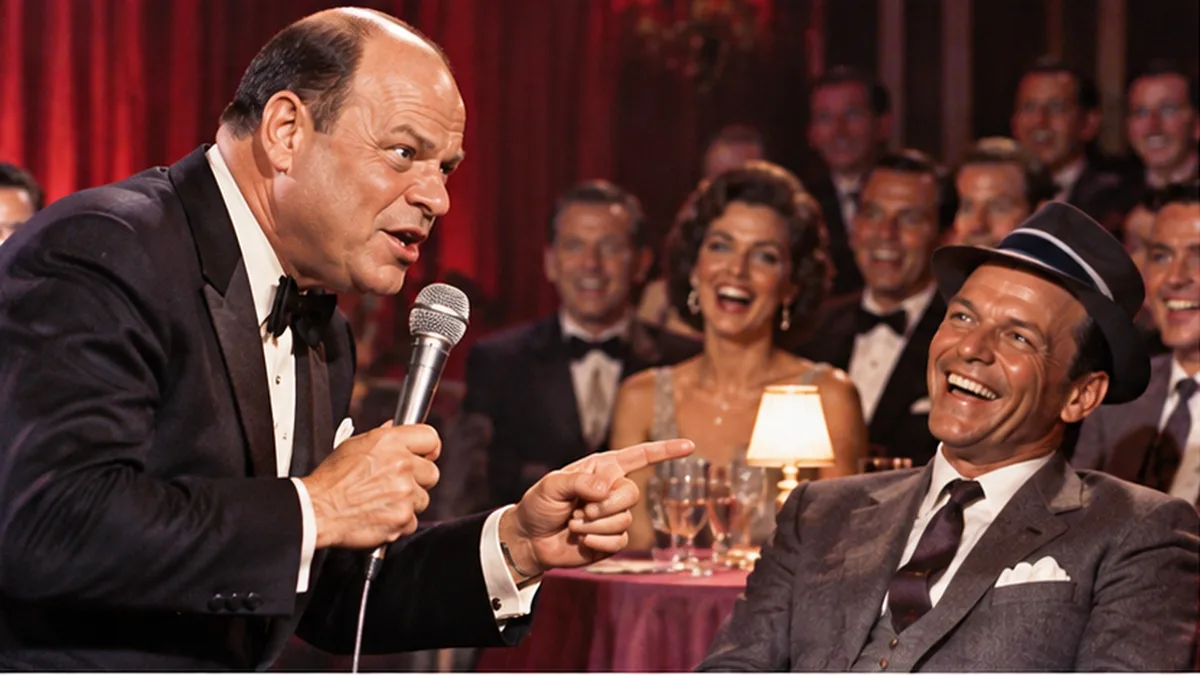
Imagine being a young comedian performing in a small Miami Beach nightclub.
Suddenly, Frank Sinatra walks through the door.
The entire room recognizes him.
Most performers would probably become nervous, offer a respectful greeting, and hope to impress the legendary singer.
Don Rickles did something completely different.
He made fun of him.
It was a bold decision that could have ended in embarrassment.
Instead, it helped launch one of the most fascinating friendships in American entertainment history.
For decades, Don Rickles and Frank Sinatra shared a remarkable relationship built on laughter, mutual respect, and the kind of jokes that almost nobody else dared to make.
Their story also explains how Rickles became one of America's most unforgettable comedians.
In the late 1950s, Don Rickles was still establishing himself as a nightclub comedian.
He had performed in difficult rooms where audiences were not always interested in hearing jokes.
Those experiences helped him develop an aggressive, improvisational style.
Rather than simply delivering prepared punchlines, Rickles learned to respond directly to the people in front of him.
One evening in 1957, Sinatra came to watch him perform at Murray Franklin's nightclub in Miami Beach.
Sinatra was already a major entertainment figure.
Rickles was not yet a household name.
But instead of treating Sinatra like an untouchable celebrity, Rickles welcomed him with a joke about his tough-guy reputation.
According to Rickles's later recollections, Sinatra laughed.
The audience relaxed.
And a friendship began.
That moment became one of the most frequently retold stories of Rickles's career.
It demonstrated the unusual confidence that would eventually make him famous.
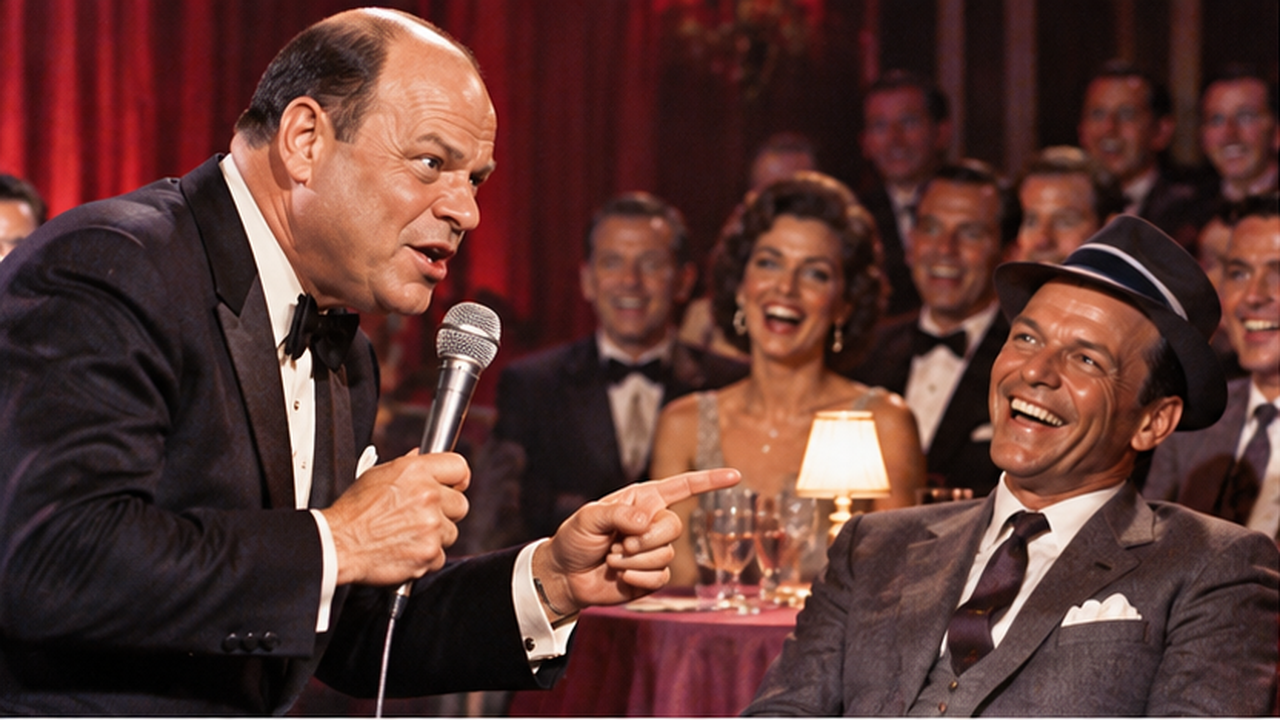
The famous encounter was not entirely accidental.
Rickles later explained that his mother, Etta, played an important role.
She knew Sinatra's mother, Dolly Sinatra.
While Don was performing in Miami Beach, Etta encouraged Dolly to persuade her famous son to attend the young comedian's show.
According to Rickles's account, the plan worked.
Sinatra eventually arrived with an entourage.
The comedian now had an extraordinary opportunity.
But getting Sinatra into the audience was only the beginning.
Rickles still needed to make him laugh.
His decision to joke about Sinatra rather than flatter him revealed exactly what made his comedy different.
He was willing to challenge the social hierarchy of the room.
Even a superstar could become part of the act.
And that unpredictability made his performances exciting.
Frank Sinatra was known for his charisma, musical talent, and commanding presence.
He was also surrounded by people who treated him with enormous respect.
Rickles offered something different.
He was not interested in behaving like another admirer.
He treated Sinatra as someone who could take a joke.
That approach became central to their friendship.
In interviews, Rickles repeatedly described Sinatra as a generous supporter who understood his unusual sense of humor.
The comedian's remarks could sound harsh when separated from their original performances.
But Rickles relied on timing, exaggeration, facial expressions, and a playful relationship with his audience.
Sinatra understood the act.
He recognized that Rickles was performing rather than expressing genuine hostility.
For the comedian, earning Sinatra's laughter was especially meaningful.
It helped establish his reputation among powerful figures in show business.
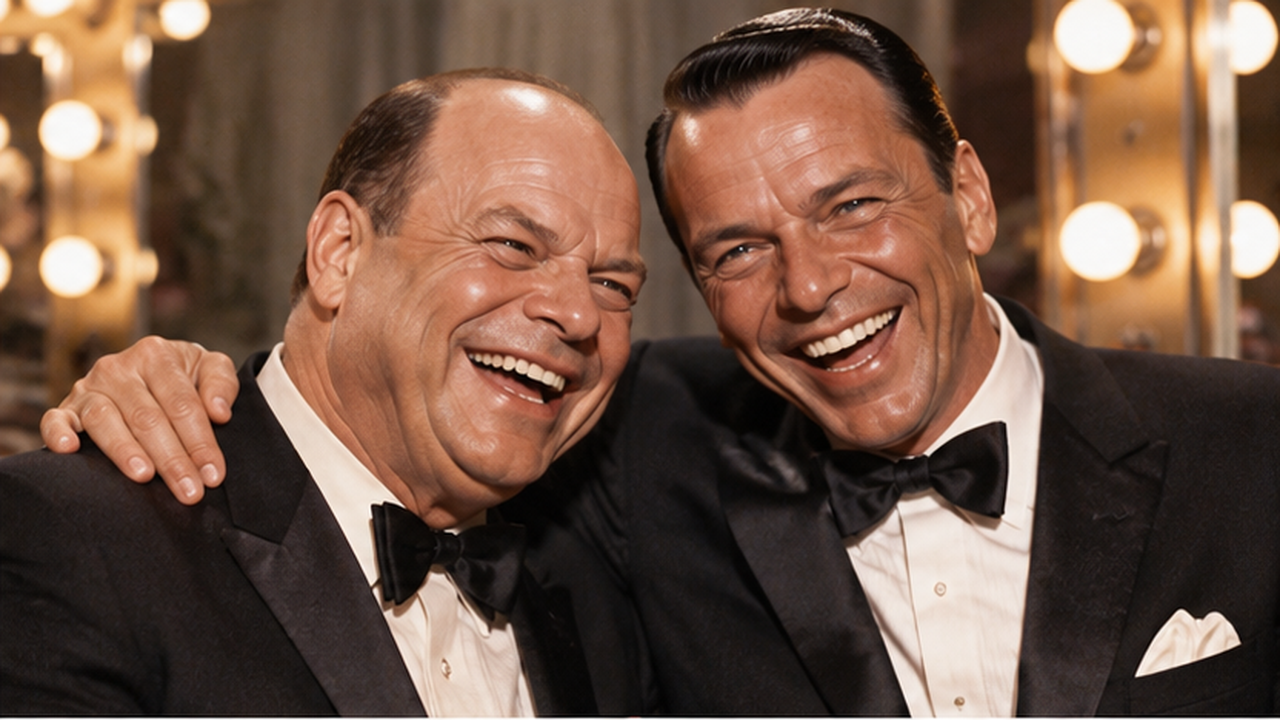
Don Rickles became widely associated with insult comedy.
But the phrase alone does not fully explain his performances.
His act depended on much more than saying offensive things.
Rickles was a skilled improviser.
He observed the audience, reacted to interruptions, and used exaggerated confrontations to create comic tension.
He could turn an ordinary interaction into a memorable exchange.
His facial expressions were just as important as his words.
A suspicious glance or exaggerated look of disbelief could make the audience laugh before he delivered another joke.
Rickles also made himself part of the comedy.
He understood that the performer needed to appear ridiculous sometimes, too.
That willingness to become the target helped distinguish his act from simple bullying.
Nevertheless, his humor reflected the nightclub culture and social attitudes of his era.
Some material involving ethnicity, gender, or other personal characteristics would be received differently today.
Understanding that historical context is important when evaluating his legacy.
Rickles's lasting influence comes partly from his improvisational skill, not from the idea that every insult should be repeated.
During the mid-twentieth century, Las Vegas became a major destination for American entertainers.
Nightclubs and casino showrooms brought together singers, comedians, actors, and television personalities.
Sinatra and other Rat Pack performers helped define the city's glamorous entertainment culture.
Rickles became an important part of that world.
His act offered a different kind of excitement from a traditional musical performance.
Audiences never knew exactly whom he might address next.
A celebrity seated near the stage could suddenly become the center of attention.
And when famous performers laughed at themselves, the entire room felt involved.
Rickles's relationship with Sinatra gave him a place within this entertainment circle.
But his success ultimately depended on his own ability to command a room.
He had developed the skill in small clubs long before becoming a major attraction.
Rickles's friendship with Sinatra was only part of his television story.
He also became one of the most memorable guests on The Tonight Show Starring Johnny Carson.
Carson appreciated Rickles's unpredictability.
Their interactions often felt less like conventional interviews and more like spontaneous comedy performances.
Rickles could enter the studio, interrupt the conversation, challenge the host, and transform the atmosphere within seconds.
His appearances became especially entertaining when other famous guests were present.
One memorable 1976 segment featured Rickles playing a prank involving Sinatra during a Carson-era broadcast.
The exchange remains available through the official Johnny Carson YouTube channel.
These television appearances introduced Rickles's nightclub personality to a much larger audience.
Viewers who had never visited a Las Vegas showroom could experience his fast-paced style at home.
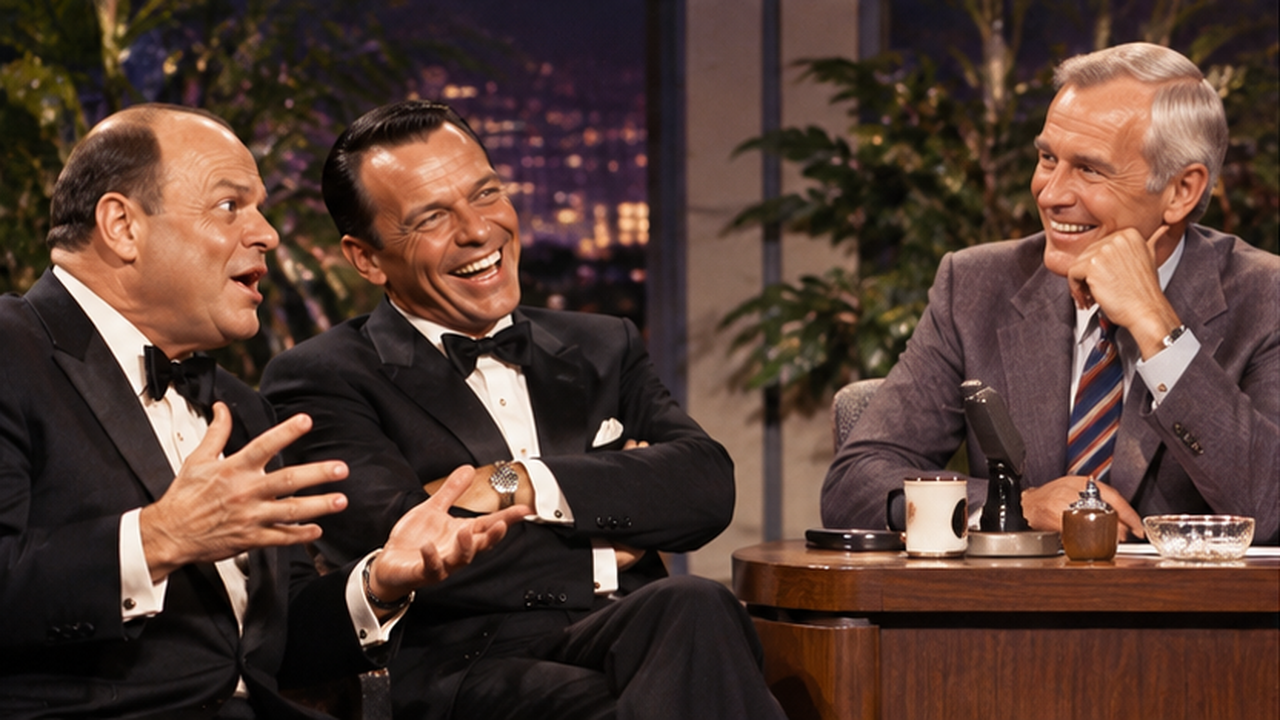
One of Rickles's favorite stories involved asking Sinatra to help him impress a woman during an evening at a Las Vegas lounge.
According to Rickles's retelling, he approached Sinatra and asked him to stop by his table.
Sinatra agreed.
But when the singer arrived, Rickles pretended to be annoyed by the interruption.
The comedian acted as though Sinatra were bothering him.
The joke reversed the usual relationship between an ordinary person and an international celebrity.
Instead of being overwhelmed by Sinatra's attention, Rickles pretended that the singer was the inconvenient one.
The story illustrates why their friendship worked.
Sinatra was willing to participate in Rickles's comedy.
And Rickles understood that their shared history made the joke possible.
The two men could play with status and celebrity because they trusted each other.
For audiences, watching someone challenge Sinatra's authority was part of the entertainment.
Their friendship was not limited to private jokes.
Sinatra also helped introduce Rickles to important audiences.
One particularly notable occasion occurred during Ronald Reagan's second presidential inauguration celebrations in January 1985.
Sinatra was involved in organizing the entertainment.
Rickles appeared at the inaugural gala and delivered a comedy routine that included jokes directed at the president and other prominent guests.
The performance became another memorable example of his willingness to tease powerful people.
According to a remembrance written by Rickles's daughter, Sinatra personally invited the comedian to participate.
For Rickles, the opportunity represented another milestone in a career that had begun in much smaller venues.
His ability to entertain both nightclub audiences and national television viewers demonstrated the adaptability of his style.
Don Rickles's public persona could appear confrontational.
Yet friends and colleagues often described a much warmer person away from the stage.
The nickname Mr. Warmth captured that contrast.
Rickles was known for his long marriage to Barbara Sklar Rickles and his enduring friendships within entertainment.
One of his closest friends was fellow comedian Bob Newhart.
Their personalities and comedic styles were very different.
Newhart was famous for his understated delivery.
Rickles was loud, fast, and confrontational.
Nevertheless, the two shared a deep friendship.
That relationship, like his connection with Sinatra, suggests that Rickles's stage persona should not be mistaken for his entire personality.
The man who insulted celebrities for a living also valued loyalty and lasting personal connections.
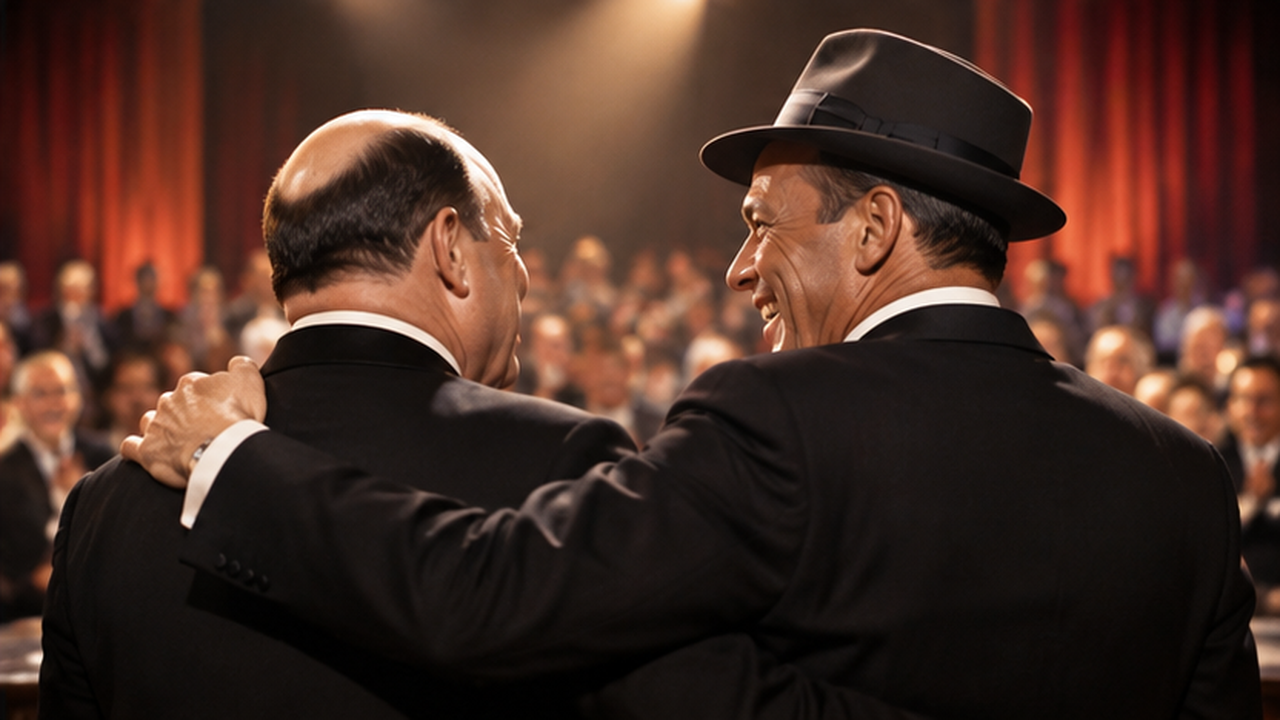
Rickles helped establish a distinctive form of audience interaction that influenced later generations of comedians.
He demonstrated that a performer could build an entire act around spontaneous exchanges.
His routines required confidence, observation, and extraordinary timing.
Rather than relying exclusively on written jokes, he treated the audience as an active part of the performance.
Modern comedians who interact directly with audiences work in a very different cultural environment.
But the importance of improvisation, timing, and understanding the room remains.
Rickles also appeared in films and television programs.
He played memorable roles in Kelly's Heroes and Martin Scorsese's Casino.
Younger audiences came to know his voice through Mr. Potato Head in Pixar's Toy Story films.
These performances introduced him to viewers who might never have watched his nightclub routines.
His career extended across multiple generations of American entertainment.
Frank Sinatra died in 1998.
Don Rickles continued performing and appearing on television for many years afterward.
Rickles died in 2017 at the age of 90.
Their friendship remains an important chapter in the history of American show business.
It began when a young comedian dared to joke about one of the most powerful entertainers in the country.
It grew through decades of performances, private stories, and public appearances.
And it revealed something essential about great comedy.
Sometimes the most memorable laughter comes from people who are willing to set aside their status and enjoy the joke.
To see their chemistry for yourself, watch this classic clip from the official Johnny Carson YouTube channel.
Video: Don Rickles Pranks Frank Sinatra | Carson Tonight Show
Don Rickles did not become famous by treating celebrities as untouchable.
He became famous by making them laugh at themselves.
His friendship with Frank Sinatra helped bring his distinctive comedy to a wider audience.
But the relationship endured because the two entertainers genuinely enjoyed each other's company.
Decades later, their shared stories still capture the spirit of an unforgettable era in American entertainment.
Do you think Don Rickles was the funniest comedian of his generation, or would you choose Johnny Carson, Bob Newhart, or George Carlin?
Tell us in the comments.


COMMENTS (0)
No comments yet.