SEPTEMBER 9, 1956 — AN ESTIMATED 60 MILLION AMERICANS TUNED IN TO WATCH A 21-YEAR-OLD SINGER WHO HAD ALREADY BECOME ONE OF THE MOST CONTROVERSIAL ENTERTAINERS IN THE COUNTRY.
His name was Elvis Presley.

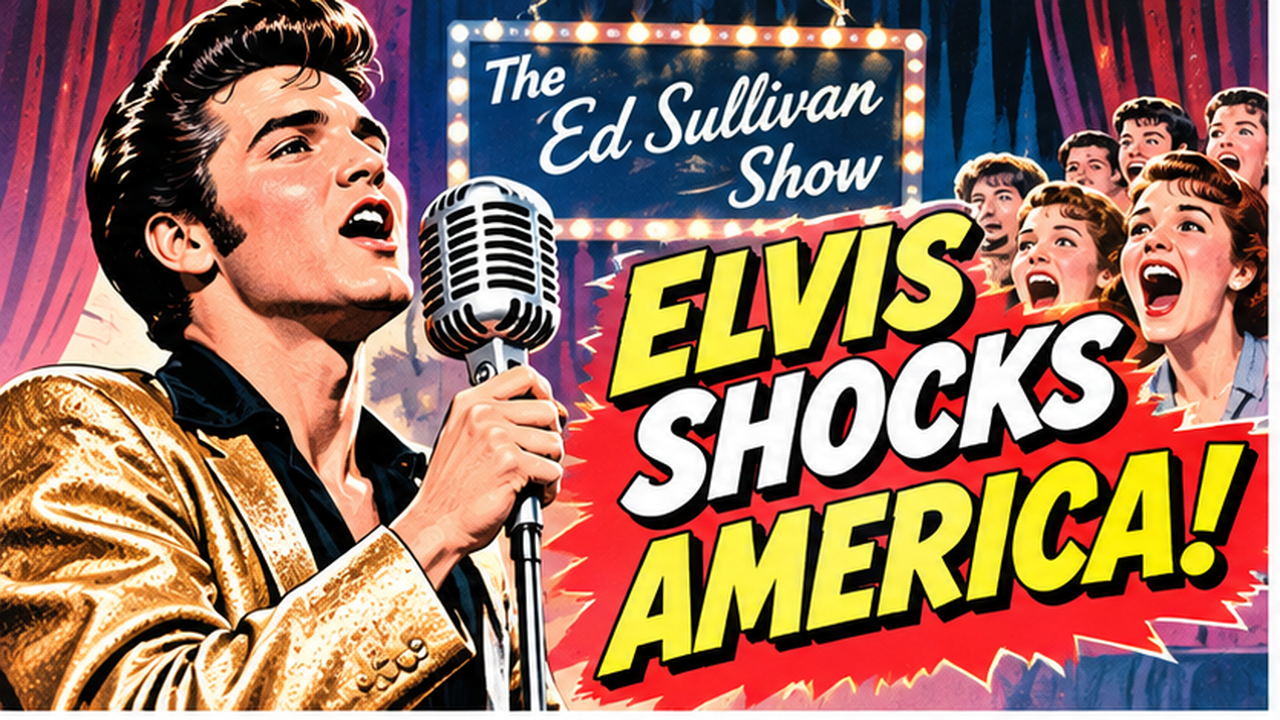
SEPTEMBER 9, 1956 — AN ESTIMATED 60 MILLION AMERICANS TUNED IN TO WATCH A 21-YEAR-OLD SINGER WHO HAD ALREADY BECOME ONE OF THE MOST CONTROVERSIAL ENTERTAINERS IN THE COUNTRY.
His name was Elvis Presley.
His music was loud, his performances were energetic, and his movements had become a national talking point.
Teenagers loved him.
Some parents and television critics were far less enthusiastic.
And now, one of America's biggest family television programs was about to introduce him to an extraordinary audience.
The program was The Ed Sullivan Show.
The moment became a landmark in rock-and-roll history.
But the true story contains several surprises.
Ed Sullivan was not even present for Elvis's first appearance.
Presley performed from Los Angeles rather than New York.
And the famous decision to film him mainly from the waist up happened months later, not during his September debut.
Here is what really happened when Elvis Presley brought rock and roll into millions of American living rooms.
MEMPHIS, TENNESSEE — 1954 TO 1956.
Elvis Presley's rise began well before his famous Ed Sullivan appearances.
His early recordings for Sun Records helped introduce a distinctive musical style that blended country, rhythm and blues, and other Southern musical traditions.
Working with musicians including guitarist Scotty Moore and bassist Bill Black, Presley developed a sound that attracted increasing attention.
His national profile expanded after his recording contract moved to RCA Victor.
In January 1956, RCA released Heartbreak Hotel.
The single became his first number-one hit on Billboard's pop chart.
His self-titled debut album also reached number one.
But the music was only part of the attraction.
Presley's movements onstage, vocal delivery, and appearance made him especially popular with younger audiences.
His television performances helped spread that excitement.
He appeared on the Dorsey Brothers' Stage Show, The Milton Berle Show, and The Steve Allen Show before making his Ed Sullivan debut.
By September, Elvis was already famous.
The question was how America's biggest Sunday-night variety show would handle him.
Ed Sullivan had built a reputation for presenting entertainment that could appeal to the whole family.
His television program featured singers, comedians, dancers, and performers from many different backgrounds.
Elvis presented a challenge.
His energetic performance style had attracted criticism from commentators who considered his movements inappropriate for family television.
A June 1956 appearance on The Milton Berle Show intensified the controversy.
During his performance of Hound Dog, Presley used exaggerated movements that delighted fans but alarmed some critics.
Sullivan was initially reluctant to book him.
Then something changed.
On July 1, 1956, Presley appeared on The Steve Allen Show, which competed with Sullivan's program.
Allen presented Elvis in a deliberately restrained setting, including a performance of Hound Dog directed toward a basset hound.
The broadcast drew strong ratings.
Sullivan's team could no longer ignore Presley's popularity.
A deal was eventually arranged for three appearances, reportedly worth $50,000.
It was an extraordinary sum for television entertainment at the time.
The performer some critics wanted kept off family television was about to become one of its biggest attractions.
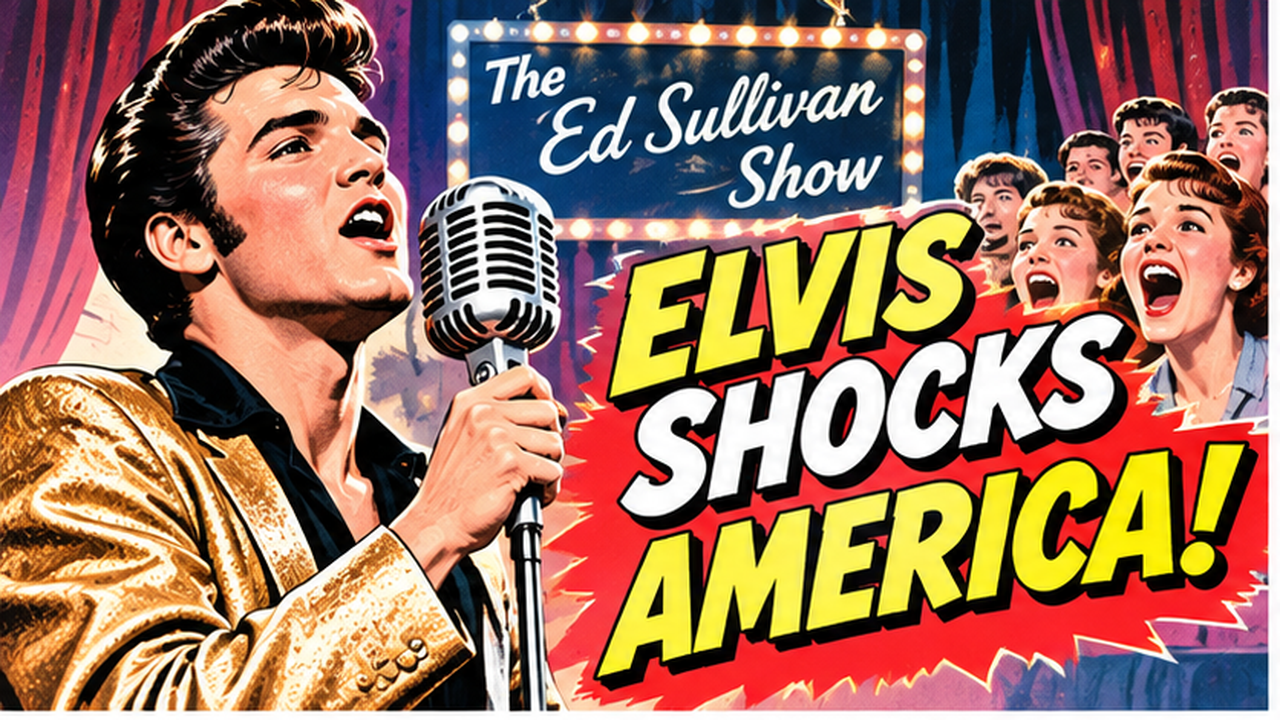
Caption: Elvis Presley's energetic performances created excitement and controversy before his first Ed Sullivan appearance in September 1956.
SUNDAY, SEPTEMBER 9, 1956 — CBS TELEVISION.
Elvis made his first appearance on The Ed Sullivan Show during the program's season premiere.
An estimated 60 million viewers tuned in.
According to the show's official history, that represented approximately 82 percent of the television audience at the time.
The scale was remarkable.
For context, the United States had a population of approximately 168 million people in 1956.
A single television appearance had reached an enormous portion of the country.
But the evening was unusual for another reason.
Neither Elvis nor Ed Sullivan was in the show's New York studio.
Sullivan was recovering from injuries sustained in an automobile accident.
British actor Charles Laughton served as guest host.
Meanwhile, Presley was in California filming his first movie, Love Me Tender.
He performed from a CBS studio in Los Angeles.
The two locations were connected through the television broadcast.
So the historic debut was not a traditional meeting between Sullivan and Presley on the same stage.
It was a coast-to-coast television event.
And viewers were eager to see what Elvis would do.
Elvis performed four songs during the September 9 broadcast.
He began with Don't Be Cruel, one of his major hits of the year.
He also introduced viewers to Love Me Tender, the title song associated with his upcoming film.
Later in the program, he performed Ready Teddy, a song associated with Little Richard.
Then came Hound Dog.
The song had already become closely connected with Presley's controversial television image.
His energetic performance demonstrated why audiences found him so compelling.
Presley combined a distinctive voice with rhythmic movement and confident stage presence.
The studio audience responded enthusiastically.
For television viewers, the appearance offered several sides of his musical personality.
Love Me Tender showed a softer, more restrained performer.
Ready Teddy and Hound Dog emphasized his rock-and-roll energy.
That contrast was part of his appeal.
He could perform a romantic ballad and then shift into an explosive rock number.
The show gave millions of Americans an opportunity to see those different qualities in one evening.
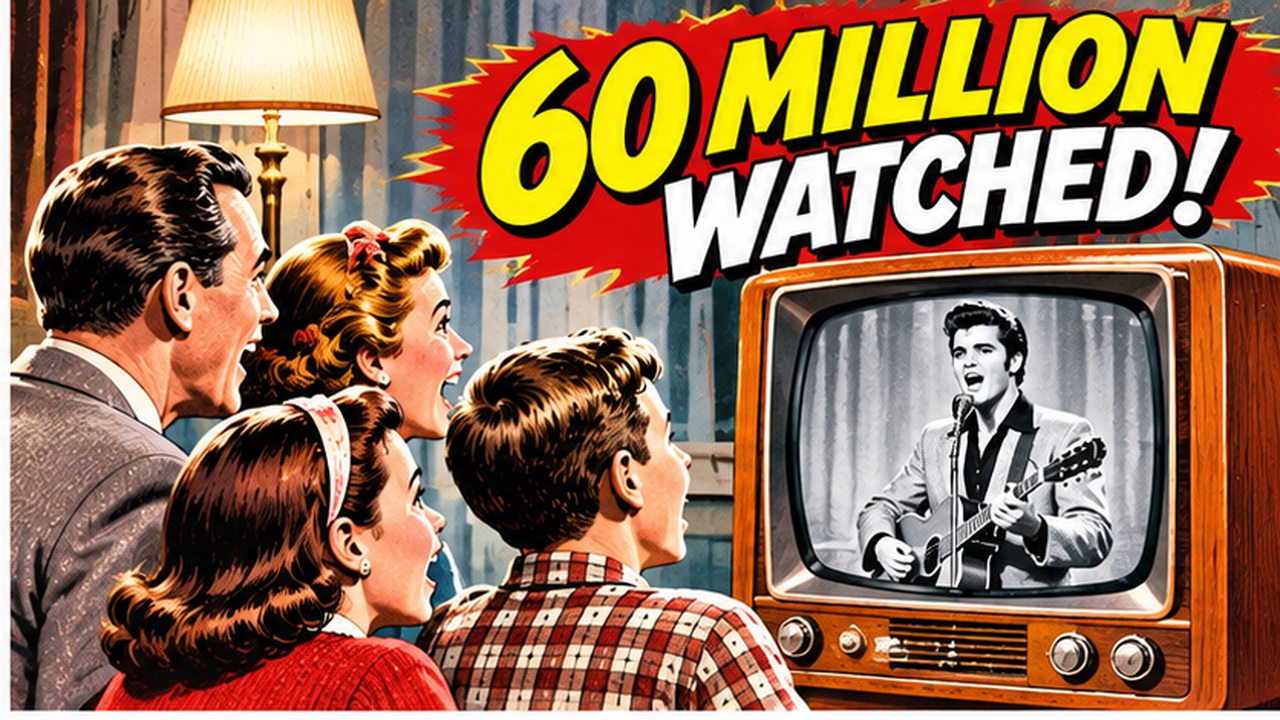
Caption: Approximately 60 million viewers watched Elvis Presley's September 9, 1956 appearance on The Ed Sullivan Show.
Today, Presley's movements may seem relatively mild compared with modern concert choreography.
In 1956, however, his performance style challenged certain expectations about behavior on national television.
Many popular television entertainers performed in a controlled, formal manner.
Elvis moved with greater freedom.
He shifted his hips, bent his knees, and emphasized the rhythm through his entire body.
His movements were especially noticeable during energetic rock-and-roll songs.
Some critics interpreted that style as excessively suggestive.
Others worried about the growing influence of rock and roll on teenagers.
But younger fans often saw something different.
They saw excitement, confidence, and an entertainer whose music felt connected to their generation.
The controversy was also tied to wider cultural tensions.
Rock and roll drew heavily on Black American musical traditions, including rhythm and blues and gospel.
Those influences had long existed before Elvis became a national star.
Presley's enormous commercial success brought sounds shaped by those traditions to a wider mainstream audience, while also raising important questions about race, recognition, and the music industry's treatment of Black artists.
Understanding that history makes the Elvis phenomenon more complicated than a simple story about one rebellious singer.
He became a major symbol of rock and roll during a period when American popular culture was changing rapidly.
Elvis returned to The Ed Sullivan Show on October 28, 1956.
This time, Ed Sullivan was present.
The broadcast came from New York.
Presley performed several songs, including Don't Be Cruel, Love Me Tender, Love Me, and Hound Dog.
His stage movements continued to attract attention.
The studio audience reacted enthusiastically, particularly during his more energetic numbers.
The appearance reinforced his status as one of the biggest entertainers in the country.
It also showed that the controversy surrounding his performance style had not disappeared.
But the show's willingness to feature Elvis again demonstrated how valuable his popularity had become.
Television executives understood that viewers wanted to see him.
The singer who had initially seemed unsuitable for Sullivan's program was now a major part of its appeal.
This is one of the most famous stories associated with Elvis Presley and American television.
According to popular retellings, cameras were ordered to show him only from the waist up because his hip movements were considered too provocative.
There is truth behind the story.
But the timeline matters.
Elvis was not restricted to waist-up shots throughout all three Ed Sullivan appearances.
During his September and October 1956 performances, television viewers could see more of his movements.
The famous camera restriction is associated with his third and final appearance, on January 6, 1957.
During much of that broadcast, cameras concentrated on his upper body.
The result limited viewers' ability to see his full dance movements.
Accounts have connected the decision to criticism of his earlier television performances.
However, claims about the precise instructions and motivations behind every camera shot should be treated carefully.
What is clearly documented is that the January broadcast used predominantly upper-body framing.
And that detail became one of the most enduring stories in early rock-and-roll television history.
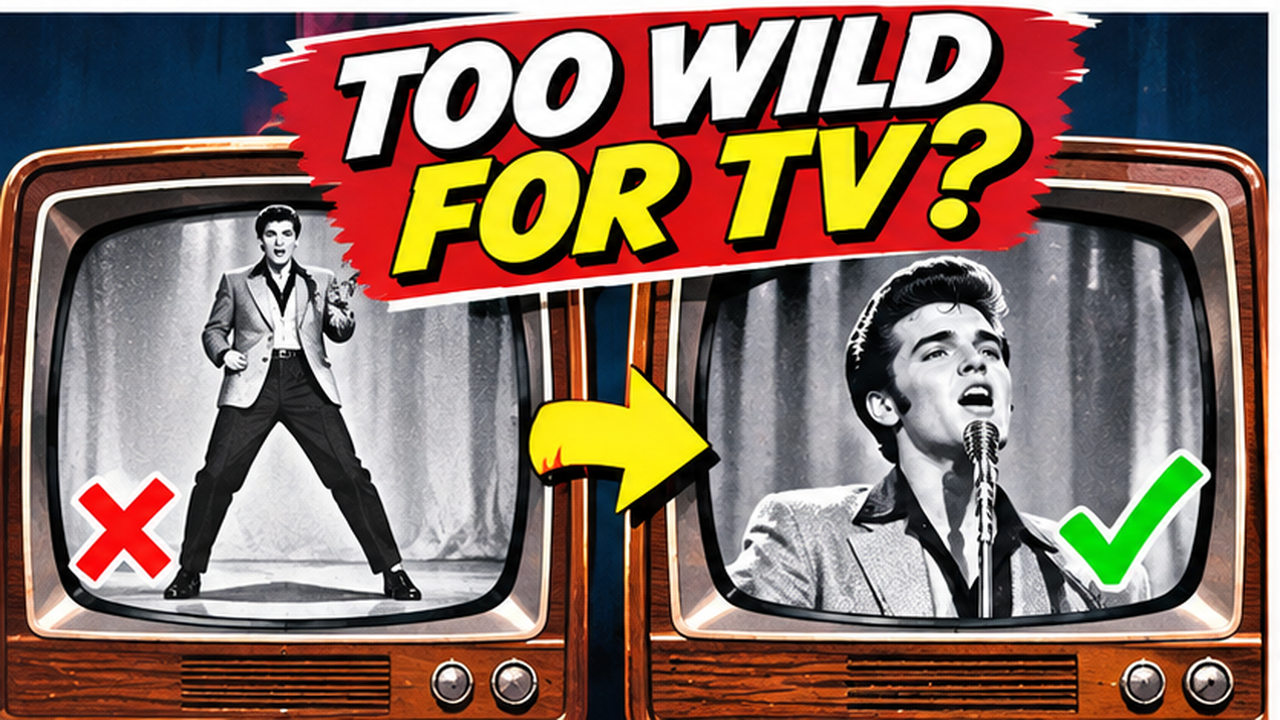
Caption: Elvis's January 6, 1957 Ed Sullivan appearance became famous for television camera framing that largely concealed his hip movements.
Elvis's third appearance took place on January 6, 1957, just two days before his 22nd birthday.
By then, he had become one of America's most recognizable young performers.
The program featured several songs associated with his rapidly growing career.
Among them were Hound Dog, Heartbreak Hotel, Love Me Tender, and Too Much.
He also performed the gospel song Peace in the Valley.
The inclusion of gospel music reflected an important part of Presley's musical background.
He had grown up listening to religious music and continued to draw inspiration from it throughout his career.
The performance demonstrated that his interests extended beyond the rock-and-roll songs that generated controversy.
At the conclusion of the broadcast, Sullivan publicly praised Presley.
He described the singer as a decent young man and spoke positively about working with him.
The endorsement was significant.
One of America's most influential television hosts had publicly expressed approval of a performer whose image had previously attracted intense criticism.
The three appearances were complete.
But their influence would continue for decades.
Elvis did not become successful because of one television appearance.
His records were already selling in enormous numbers.
His concerts had attracted enthusiastic audiences.
And his earlier television performances had helped establish his national reputation.
But The Ed Sullivan Show gave him access to an unusually broad audience.
It brought his music into homes where rock and roll might otherwise have received little attention.
Parents and teenagers could watch the same broadcast while forming very different opinions about the performer.
That shared experience was part of television's cultural power.
The appearances also showed how controversy could intensify public interest in an entertainer.
Criticism did not stop young fans from supporting Elvis.
In some cases, it made him even more fascinating.
Presley continued releasing successful recordings, appearing in films, and developing his performance career.
His influence extended into fashion, celebrity culture, and the relationship between popular music and television.
Yet the Ed Sullivan broadcasts remain among the clearest visual records of his early national fame.
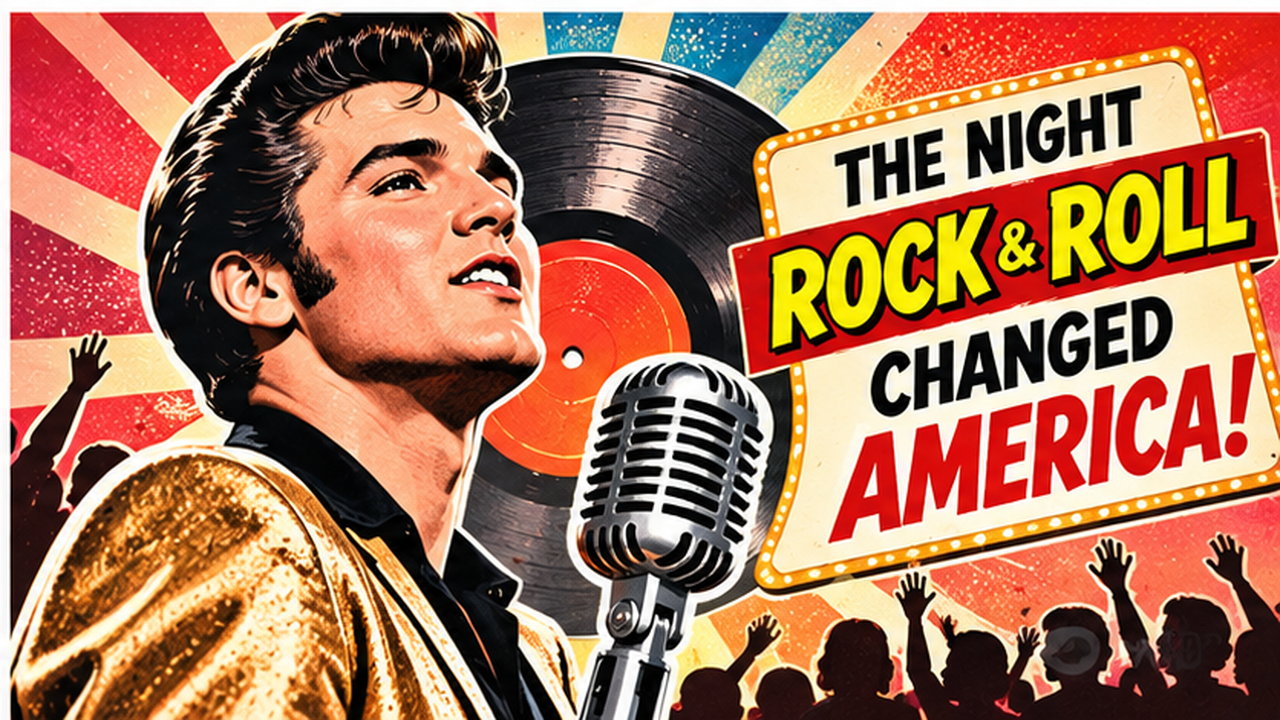
Caption: Elvis Presley's Ed Sullivan appearances demonstrated the enormous power of television in shaping American popular culture.
It is tempting to describe Elvis's 1956 appearance as the night rock and roll was invented.
That would not be historically accurate.
Rock and roll had developed through multiple musical traditions and performers before Presley became famous.
Artists including Sister Rosetta Tharpe, Big Mama Thornton, Chuck Berry, Fats Domino, and Little Richard played major roles in shaping the music.
Presley was influenced by that wider musical environment.
His achievement was to become one of the genre's most commercially successful and visible performers.
Television accelerated that visibility.
The Ed Sullivan appearances brought his music and stage presence to a mass audience during a period of enormous cultural change.
They also captured a generational divide that would become familiar in later decades.
Young audiences embraced a performer whose style challenged older expectations.
Some adults criticized him.
The entertainment industry recognized his commercial power.
And television helped turn the resulting controversy into a national conversation.
That is why the 1956 broadcasts still matter.
They offer a window into the moment when rock and roll became impossible for mainstream American culture to ignore.
ONE SINGER. ONE TELEVISION STAGE. AN ESTIMATED 60 MILLION VIEWERS.
The original footage reveals why Elvis Presley's first Ed Sullivan appearance attracted such extraordinary attention.
Watch his September 9, 1956 performance of Hound Dog.
Notice the rhythm, his vocal delivery, and the physical energy that made him so distinctive.
The recording also provides an opportunity to compare the actual performance with the myths that developed around it.
The famous waist-up camera story belongs primarily to the later January 1957 appearance.
The September footage tells a different story.
It shows a young performer whose popularity was already reshaping American entertainment.
On September 9, 1956, Elvis Presley appeared on one of America's most influential television programs.
He was just 21 years old.
He had already achieved major success in music.
But the broadcast introduced his performance style to an audience of extraordinary size.
Over three appearances, Elvis became one of the show's most memorable guests.
His energetic movements inspired enthusiastic fans and sharp criticism.
The final broadcast produced the famous waist-up camera story.
And Ed Sullivan's public endorsement helped mark a turning point in the singer's television image.
Elvis did not invent rock and roll.
But his appearances on The Ed Sullivan Show became defining moments in the genre's journey into mainstream American entertainment.
Nearly seventy years later, the surviving footage still captures the excitement, controversy, and cultural changes surrounding his rise.
Do you think Elvis Presley's dance moves were truly shocking for 1956, or was the controversy exaggerated?
Would you have been cheering in the studio audience or watching in disbelief at home?
Share your thoughts in the comments.


COMMENTS (0)
No comments yet.