What would you pay for a pair of used basketball shoes?
A hundred dollars?

What would you pay for a pair of used basketball shoes?
A hundred dollars?
A thousand?
How about more than two million dollars?
When the shoes belonged to Michael Jordan, the answer can become extraordinary.
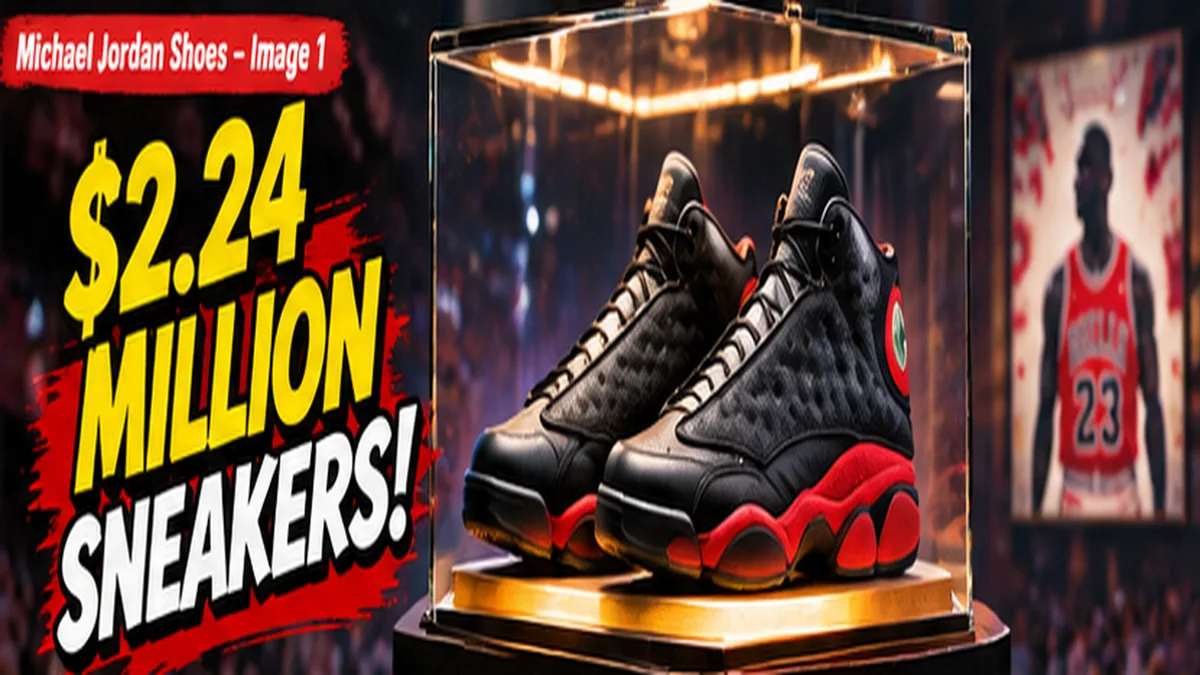
In April 2023, a pair of Air Jordan XIII sneakers worn during the 1998 NBA Finals sold for approximately $2.24 million.
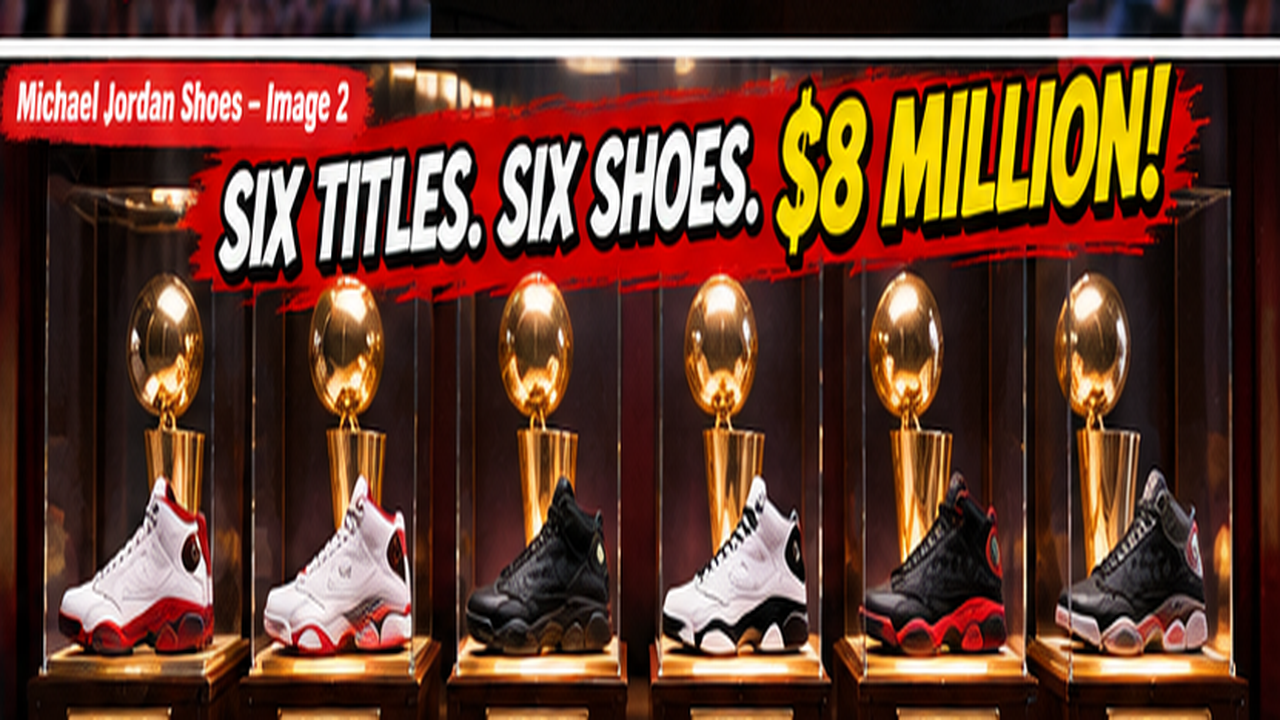
Then, in February 2024, a collection of six individual sneakers connected to Jordan's six NBA championships sold for approximately $8 million.
These were not ordinary shoes.
They were physical reminders of some of the most celebrated moments in basketball history.
But why would collectors spend such enormous sums on footwear?
The answer combines Jordan's legendary career, the history of Nike's Air Jordan brand, the scarcity of authentic game-worn memorabilia, and the emotional power of championship moments.
Michael Jordan entered the NBA in 1984 after being selected by the Chicago Bulls.
He quickly became one of the league's most exciting players.
His athleticism, scoring ability, and competitive intensity made him a global superstar.
Jordan eventually won six NBA championships with Chicago.
He also earned five regular-season Most Valuable Player awards and six NBA Finals MVP awards.
But his influence extended beyond basketball.
His partnership with Nike helped transform athletic footwear into a major part of popular culture.
The original Air Jordan sneaker was developed during his rookie era and reached consumers in 1985.
Over time, new Air Jordan models became closely associated with different stages of his career.
Fans wanted to wear the shoes.
Collectors wanted to own them.
And decades later, some of the actual sneakers Jordan wore during historic games became valuable museum-quality artifacts.
One of the most remarkable Michael Jordan sneaker auctions took place at Sotheby's in April 2023.
The auction featured a pair of black-and-red Air Jordan XIII sneakers worn by Jordan during Game 2 of the 1998 NBA Finals.
The Chicago Bulls were facing the Utah Jazz.
Jordan scored 37 points as Chicago won the game 93–88, tying the series at one game apiece.
The sneakers were signed and connected to that specific game.
According to Sotheby's account of their history, Jordan gave the shoes to a ball boy after the game.
The pair eventually entered the collectibles market.
On April 11, 2023, the shoes sold for $2,238,000.
At the time, the result set a record for sneakers sold at auction.
The price was astonishing.
But the shoes' appeal was not simply their age or design.
They were connected to the final championship season of one of basketball's greatest players.
The 1997–98 Chicago Bulls season became one of the most famous chapters in NBA history.
Jordan, Scottie Pippen, and their teammates were attempting to win a sixth championship.
The team had already completed one three-peat from 1991 through 1993.
After Jordan returned to basketball, Chicago won another championship in 1996 and again in 1997.
The 1998 season offered the opportunity to complete a second three-peat.
But the Bulls faced uncertainty about their future.
The team's eventual championship run became the central subject of the 2020 documentary series The Last Dance.
In the NBA Finals, Chicago faced a Utah Jazz team led by Karl Malone and John Stockton.
The series was competitive.
Jordan's Game 2 performance helped the Bulls recover from an opening-game loss.
Later, in Game 6, he delivered the famous final shot that secured Chicago's sixth championship.
That historical context helps explain the value of the Game 2 sneakers.
They belonged to a specific moment in a season that became legendary.
The 2023 sneaker sale was extraordinary.
But another auction soon attracted even greater attention.
In February 2024, Sotheby's sold a collection known as The Dynasty Collection.
It contained six individual sneakers worn by Michael Jordan in the championship-clinching games of the Bulls' six NBA title runs.
The collection included shoes associated with:
1991 — Air Jordan VI
1992 — Air Jordan VII
1993 — Air Jordan VIII
1996 — Air Jordan XI
1997 — Air Jordan XII
1998 — Air Jordan XIV
Importantly, these were six individual shoes, not six complete pairs.
The collection reportedly originated with a longtime Chicago Bulls executive who received one shoe from Jordan after each championship-clinching game.
The six-shoe set sold for approximately $8 million.
The result established a new benchmark for game-worn sneaker collectibles.
It was an extraordinary price for an extraordinary group of objects.
Each shoe represented a different championship.
Together, they traced Jordan's greatest years with the Bulls.
A mass-produced sneaker and a game-worn sneaker may look similar.
But collectors see them very differently.
A regular retail shoe is one of many manufactured examples.
An authenticated game-worn shoe can be linked to a specific athlete and sporting event.
That connection creates historical significance.
For Jordan memorabilia, several factors can influence value.
The first is the importance of the game.
A shoe worn during an NBA Finals appearance may attract greater attention than one associated with an ordinary regular-season game.
The second is authentication.
Collectors want convincing evidence that Jordan actually wore the item.
The third is provenance.
A documented ownership history can make an object more trustworthy.
The fourth is scarcity.
Only a limited number of authentic shoes from a particular historic game may be available.
Finally, there is collector demand.
Jordan remains one of the most recognizable athletes in the world.
His global popularity helps support interest in memorabilia connected to his career.
However, even authentic Jordan shoes do not all command million-dollar prices.
Each item has its own history and market.
Authentication is essential in the market for expensive sports memorabilia.
A seller's claim that a shoe was worn by Jordan is not enough.
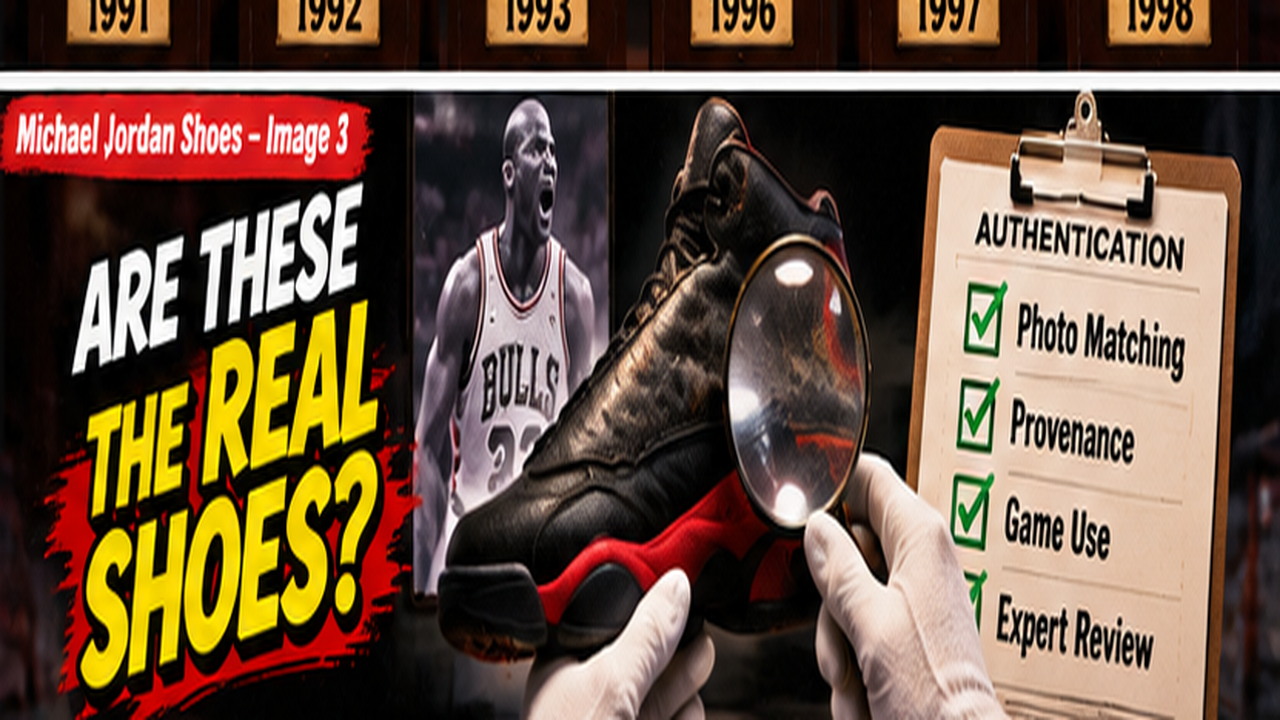
Experts may examine photographs from the relevant game.
They compare details such as stitching, markings, wear patterns, and other distinguishing features.
This process is commonly known as photo matching.
If the physical shoe contains unique characteristics visible in historical photographs, those matches can support its identification.
Other documentation may include team records, statements from original recipients, and the item's ownership history.
Professional authentication organizations may examine the evidence and issue reports.
But authentication is not an automatic guarantee of future value.
Collectors should still investigate the specific item, its documentation, and the reputation of the seller.
For multimillion-dollar purchases, careful due diligence is essential.
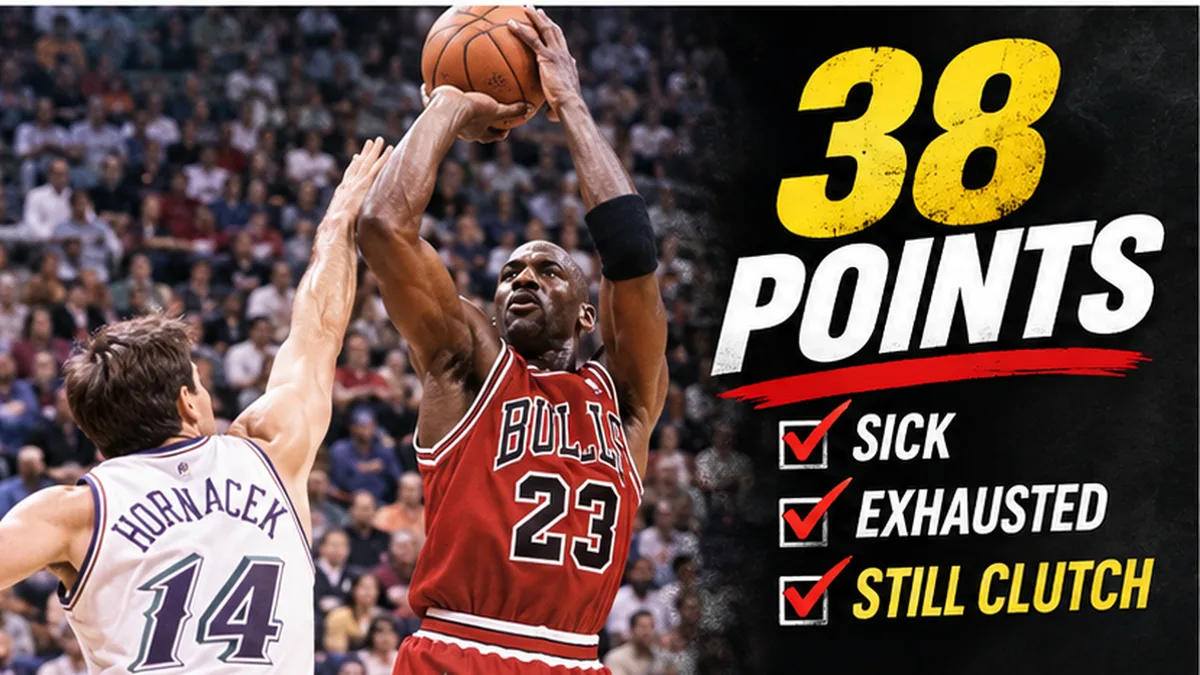
Another unforgettable Jordan performance occurred on June 11, 1997.
During Game 5 of the NBA Finals against the Utah Jazz, Jordan played despite suffering from a significant illness.
He scored 38 points and helped the Chicago Bulls win 90–88.
The performance became famous as the Flu Game.
Jordan wore the Air Jordan XII during that championship season.
The model became closely associated with his fifth NBA title.
The 1997 shoe included in Sotheby's Dynasty Collection was connected to the championship-clinching Game 6, not the Flu Game itself.
That distinction matters.
Two objects from the same season can have very different historical identities.
A shoe from the Flu Game and a shoe from the championship-clinching game should never be described as the same item.
For collectors, the exact game is part of the item's value.
Jordan's 1997 season demonstrates how individual performances can give ordinary-looking objects extraordinary cultural significance.
Sneakers are only one category of valuable Jordan collectibles.
His game-worn jerseys have also attracted enormous auction prices.
In September 2022, Sotheby's sold Jordan's jersey from Game 1 of the 1998 NBA Finals for approximately $10.1 million.
The result demonstrated how strongly collectors value items connected to historic basketball moments.
Other collectible categories include autographed basketballs, trading cards, photographs, and documented game-used equipment.
But not all Jordan memorabilia is equally valuable.
An ordinary signed item differs from a jersey worn during a championship game.
A retail Air Jordan sneaker differs from a photo-matched pair worn on an NBA court.
The specific story behind the object matters.
And the strongest auction results usually involve a combination of historical importance, authentication, and scarcity.
Record-breaking auction prices naturally attract attention.
Some collectors view rare sports memorabilia as alternative assets.
But the market involves significant risks.
Prices can rise or fall.
Collector preferences can change.
Auction fees and insurance costs can be substantial.
Expensive items may also be difficult to sell quickly.
A record sale does not mean every comparable object will achieve the same result.
The most famous Jordan shoes are exceptional artifacts.
Their prices should not be treated as a reliable guide to the value of ordinary used sneakers.
For most fans, the greatest reason to collect basketball memorabilia is the connection to the sport.
A treasured object can be meaningful without being worth millions.
Michael Jordan's career included countless memorable performances.
His six championships helped establish his place among basketball's all-time greats.
His partnership with Nike changed the relationship between professional athletes, fashion, and consumer culture.
And his game-worn sneakers now occupy a remarkable position in the collectibles market.
They are pieces of sporting history.
A scuffed shoe can remind fans of a championship celebration.
A signed sneaker can connect a collector with a legendary season.
And a group of six individual shoes can tell the story of an entire dynasty.
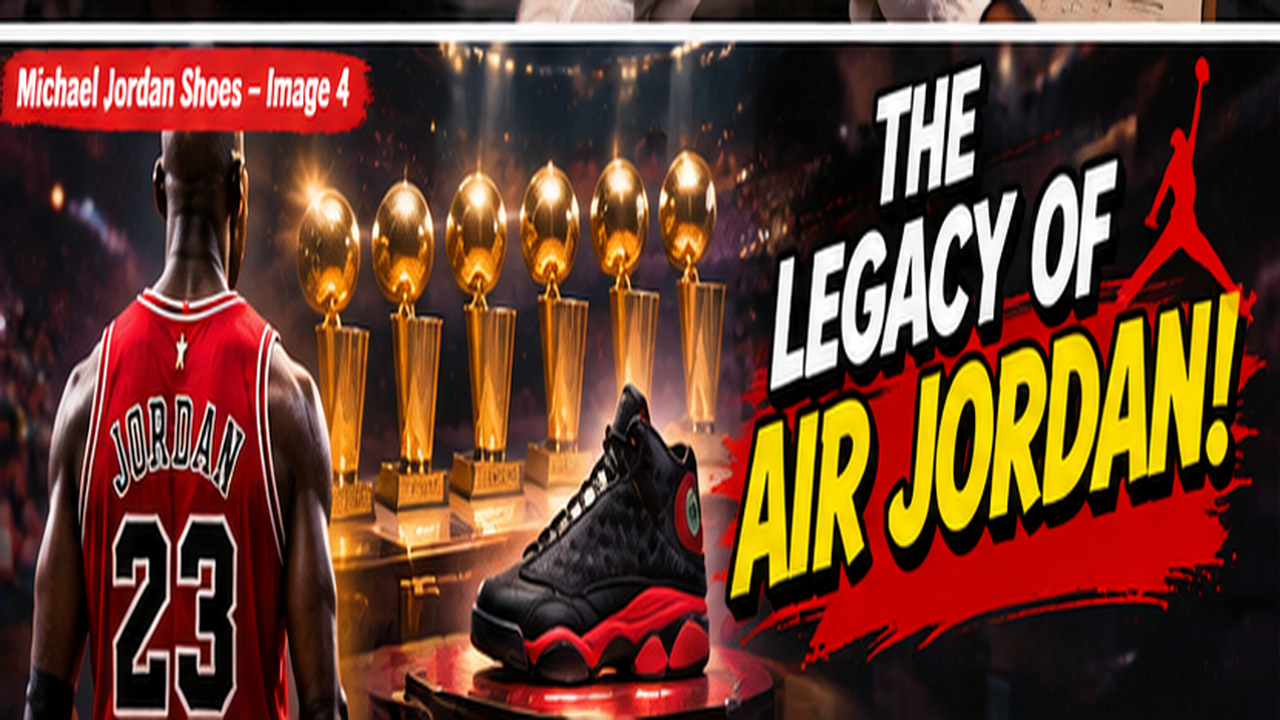
Caption: Jordan's game-worn sneakers connect basketball history with sneaker culture and the global memorabilia market.
For readers interested in the original items, Sotheby's has published detailed information about both major sales.
The auction house's The Dynasty Collection article explains the six championship shoes and their connection to Jordan's career.
Its Victoriam catalog documents the 1998 NBA Finals Game 2 Air Jordan XIII sneakers.
These original auction materials are useful because they identify the objects, their history, and the relevant sales.
Readers should distinguish auction estimates from final realized prices.
They should also remember that one historic sale does not establish the value of every similar object.
Michael Jordan's game-worn shoes prove that sports memorabilia can become part of cultural history.
The $2.238 million Air Jordan XIII sale captured attention because the shoes were linked to the 1998 NBA Finals.
The approximately $8 million Dynasty Collection was even more remarkable because it represented all six of Jordan's championship-clinching games.
For collectors, those shoes are not merely footwear.
They are reminders of legendary performances, unforgettable championships, and one of the most influential athletes of all time.
The real value lies in the stories they preserve.
If you could own one piece of Michael Jordan history, would you choose his game-worn sneakers, a championship jersey, or a rare rookie card?
Tell us in the comments.


COMMENTS (0)
No comments yet.