AUGUST 1, 1981 — AT 12:01 A.M. EASTERN TIME, A NEW CABLE CHANNEL BEGAN BROADCASTING WITH AN ASTRONAUT, A FLAG, AND FIVE WORDS THAT ANNOUNCED A NEW ERA.
“Ladies and gentlemen, rock and roll.”

AUGUST 1, 1981 — AT 12:01 A.M. EASTERN TIME, A NEW CABLE CHANNEL BEGAN BROADCASTING WITH AN ASTRONAUT, A FLAG, AND FIVE WORDS THAT ANNOUNCED A NEW ERA.
“Ladies and gentlemen, rock and roll.”
The voice belonged to John Lack, an executive involved in launching a channel called MTV: Music Television.
Moments later, viewers saw a music video by a British group called The Buggles.
The song was Video Killed the Radio Star.
The choice would become one of the most famous coincidences in entertainment history.
A song about changing technology had just introduced a television channel that would transform how millions of people discovered music.
But there was a twist.
The music video was already two years old.
MTV was not yet available across America.
And many people in the music industry were uncertain whether a television channel devoted to music videos could succeed.
Here is the true story of the first music video on MTV in 1981, and how one midnight broadcast helped change popular culture.
UNITED STATES — LATE 1970s.
Before MTV, radio was one of the most important ways Americans discovered popular music.
Listeners tuned in to hear new singles, familiar favorites, and the voices of their favorite radio personalities.
Record stores were another essential part of music culture.
Fans bought vinyl records, examined album covers, and read music magazines to learn about artists.
Television also featured musical performances.
Programs such as American Bandstand and Soul Train brought performers into viewers' homes.
Music videos existed, too.
Artists and record companies had been producing promotional films and performance clips for years.
Queen's Bohemian Rhapsody promotional video, released in 1975, was one well-known example.
But there was no widely established American cable channel devoted to broadcasting music videos around the clock.
That was the opportunity MTV hoped to seize.
The idea was simple.
Instead of waiting for a musician to appear on a variety show, viewers could switch on a television channel and watch music videos throughout the day.
It was an unusual concept.
And in 1981, nobody could be certain how audiences would respond.
SATURDAY, AUGUST 1, 1981 — 12:01 A.M. EASTERN TIME.
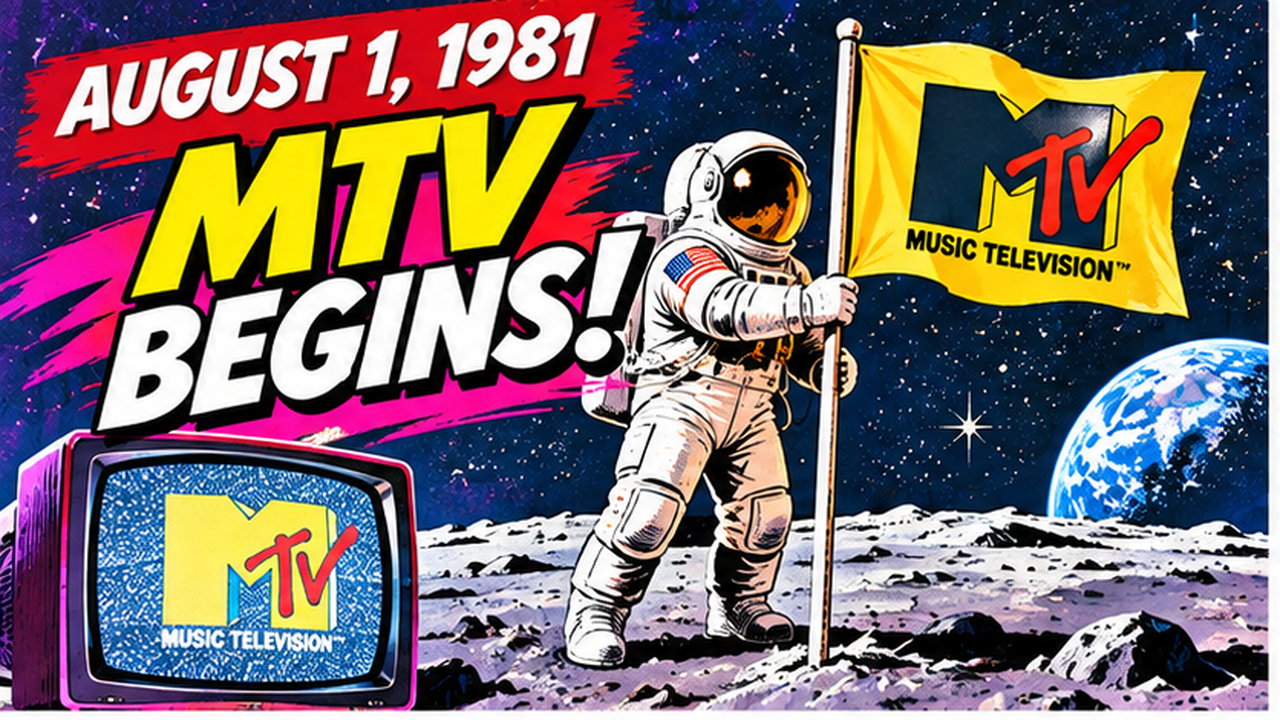
MTV began broadcasting with imagery associated with America's space program.
The opening sequence used footage of a rocket launch and an astronaut planting a flag on the Moon.
But the flag carried MTV's distinctive logo.
The imagery was deliberately ambitious.
Just as the Moon landing had symbolized a technological milestone, MTV was presenting itself as the beginning of something new.
John Lack delivered the opening announcement.
“Ladies and gentlemen, rock and roll.”
Then came the music.
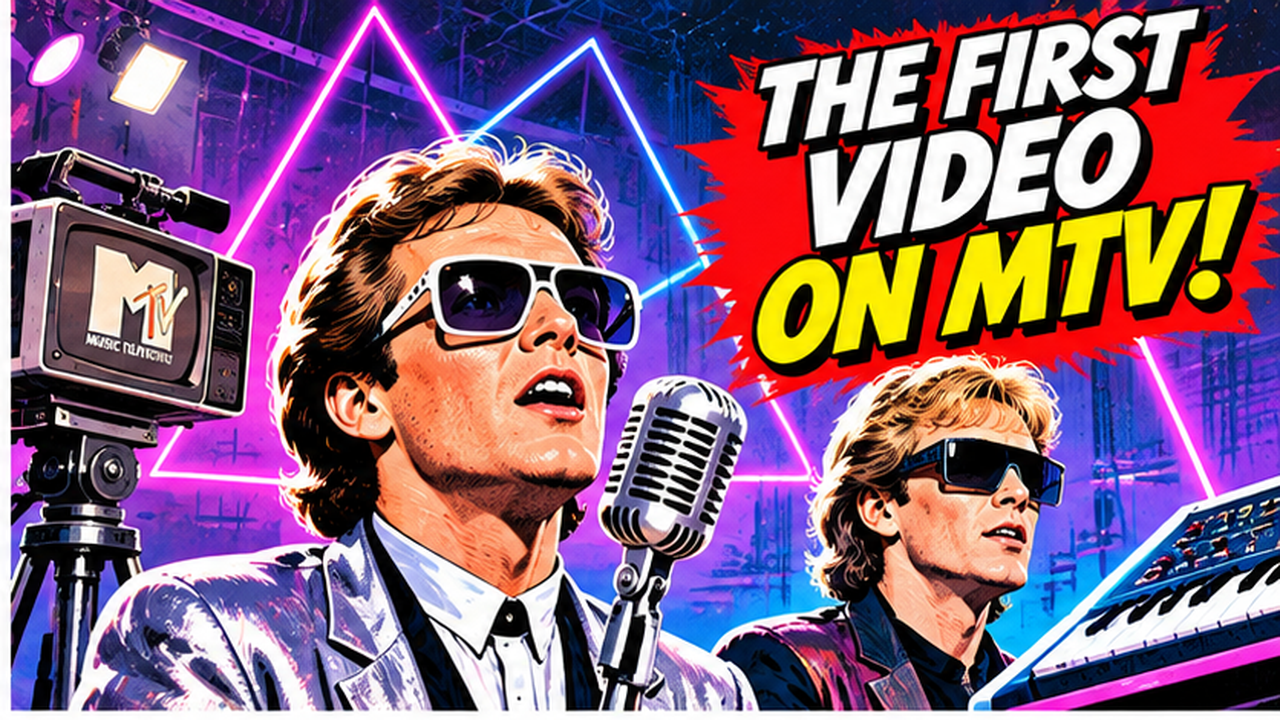
The first video was Video Killed the Radio Star by The Buggles.
It was an inspired choice for a channel promising to connect popular music with television.
Yet the broadcast was hardly a nationwide event at the time.
MTV's early cable distribution was limited.
Many American households could not receive the channel, and major markets such as New York and Los Angeles did not initially have widespread access.
The future cultural giant began with a relatively small audience.
That contrast makes the story even more remarkable.
The first music video on MTV was not selected from a brand-new American hit.
It was a British recording released in 1979.
The Buggles consisted of musicians Trevor Horn and Geoff Downes.
Their song Video Killed the Radio Star was written by Horn, Downes, and Bruce Woolley.
The Buggles' recording became a major international success.
It reached number one on the UK Singles Chart in October 1979.
The song explored nostalgia and the uneasy relationship between older forms of entertainment and emerging technology.
Its title suggested that television images might replace the importance of voices heard over radio.
When MTV chose the video to open its programming, the symbolism was difficult to miss.
A song about video changing music was becoming the first video on a channel dedicated to exactly that transformation.
But the title was not a literal prediction that radio would disappear.
Radio remained an important part of the music business after MTV launched.
Instead, the song captured a broader cultural anxiety.
New technology was changing the way people experienced entertainment.
MTV would soon demonstrate just how significant that change could become.
One of the most common misunderstandings about MTV's launch is that Video Killed the Radio Star was the first music video ever made.
It was not.
Music videos and promotional films existed long before 1981.
The Buggles' video itself dated from 1979.
Directed by Russell Mulcahy, it combined performance footage with futuristic visual imagery.
The video featured a stylized setting, theatrical lighting, and science-fiction-inspired elements.
Those visuals matched the song's fascination with technology and the future.
By the time MTV launched, the video had already been circulating for nearly two years.
Its historical importance comes from where and when it was broadcast.
It became the first music video shown on MTV.
That distinction matters.
MTV did not invent the music video.
It helped turn music videos into a central part of mainstream music promotion.
The first video receives most of the attention.
But MTV's opening playlist offers another fascinating glimpse into the early 1980s music industry.
After The Buggles, the channel played Pat Benatar's You Better Run.
The third video was Rod Stewart's She Won't Dance With Me.
The early rotation featured a mixture of rock, new wave, and pop performers.
Some artists were already successful.
Others were less familiar to American audiences.
MTV's first days also revealed a practical challenge.
The channel needed enough videos to fill a continuous broadcast schedule.
Record companies had produced promotional clips before MTV, but the available catalog was limited compared with the enormous number of videos created in later decades.
The network repeated videos frequently.
Its presentation was also less polished than the MTV viewers would come to recognize.
But those limitations were part of a larger experiment.
For the first time, American cable viewers had a channel built around watching popular music rather than simply listening to it.
MTV needed more than a collection of music videos.
It also needed personalities who could introduce artists, connect with viewers, and give the channel a recognizable identity.
The network developed the role of the video jockey, commonly shortened to VJ.
Its five original VJs were Martha Quinn, Nina Blackwood, Mark Goodman, Alan Hunter, and J.J. Jackson.
They introduced videos, interviewed musicians, and presented music news.
Their casual delivery helped make MTV feel different from traditional television programming.
Rather than resembling a formal news broadcast, the channel developed an energetic style aimed at young music fans.
The VJs became recognizable figures in their own right.
They helped create a sense of community around the channel.
Viewers were not only watching songs.
They were becoming familiar with the people who presented them.
That relationship would become an important part of MTV's identity.
It is easy to imagine that MTV became a sensation the moment it launched.
The reality was more complicated.
Cable television was still expanding in the United States.
Not every household subscribed to cable, and not every cable provider carried MTV.
The channel's limited distribution meant that many music fans could not watch it even if they wanted to.
The network also faced skepticism about whether audiences would spend hours watching music videos.
MTV needed to persuade both viewers and cable operators that the concept was worth supporting.
Its marketing campaign eventually made that problem part of its message.
The phrase I Want My MTV encouraged viewers to demand access to the channel.
The campaign became closely associated with the network's rise.
As distribution expanded, MTV reached more households.
Its audience grew.
And its influence on the music industry became increasingly difficult to ignore.
The small cable experiment was developing into a major entertainment brand.
Before MTV, an artist could become famous primarily through radio airplay, record sales, concerts, and television appearances.
MTV added another powerful promotional opportunity.
A memorable music video could help introduce a performer to viewers who had never heard the song before.
Artists began paying greater attention to how their music looked on screen.
Fashion, choreography, visual effects, storytelling, and editing became increasingly important.
Record companies invested more heavily in producing promotional videos.
Directors and production teams experimented with new visual styles.
The music video became more than a filmed performance.
It could tell a story.
It could create an atmosphere.
It could establish an artist's public image.
And it could become a cultural event in its own right.
MTV did not single-handedly create these developments.
But it provided a major platform that accelerated them.
The connection between popular music and visual identity became stronger throughout the decade.
MTV's influence became especially visible as the 1980s progressed.
Duran Duran used visually ambitious videos to strengthen its international appeal.
Madonna developed a powerful relationship between her music, fashion, and screen persona.
Prince combined distinctive visual presentation with musical innovation.
Michael Jackson's videos helped redefine expectations for music-video production.
His Billie Jean and Beat It videos became important MTV-era landmarks.
Then, in December 1983, Jackson released the extended music video for Thriller.
Directed by John Landis, the production combined music, choreography, makeup effects, and horror-film storytelling.
It demonstrated how a music video could function as a major entertainment production.
But MTV's early history also included controversy over representation.
The channel was criticized for giving insufficient exposure to Black artists during its early period.
Its later embrace of performers such as Michael Jackson did not erase those criticisms.
The history of MTV's rise therefore includes both creative innovation and debates about who received access to its powerful promotional platform.
That broader context is essential to understanding the channel's impact.
MTV's influence extended beyond individual artists.
Its fast-paced visual presentation helped shape the look of youth-oriented television.
Quick edits, bold graphics, and an informal on-air style became increasingly familiar to audiences.
The network also expanded into programming beyond continuous music videos.
The MTV Video Music Awards began in 1984.
Programs such as Yo! MTV Raps, Headbangers Ball, and MTV Unplugged later helped introduce audiences to different musical styles and performance formats.
In 1992, The Real World debuted.
The series became an important part of MTV's move into reality television.
Over time, the channel's programming shifted substantially.
Music videos became less central to its flagship schedule.
But the influence of MTV's original concept remained.
It had demonstrated that music, television, celebrity culture, and youth identity could be connected through a single media platform.
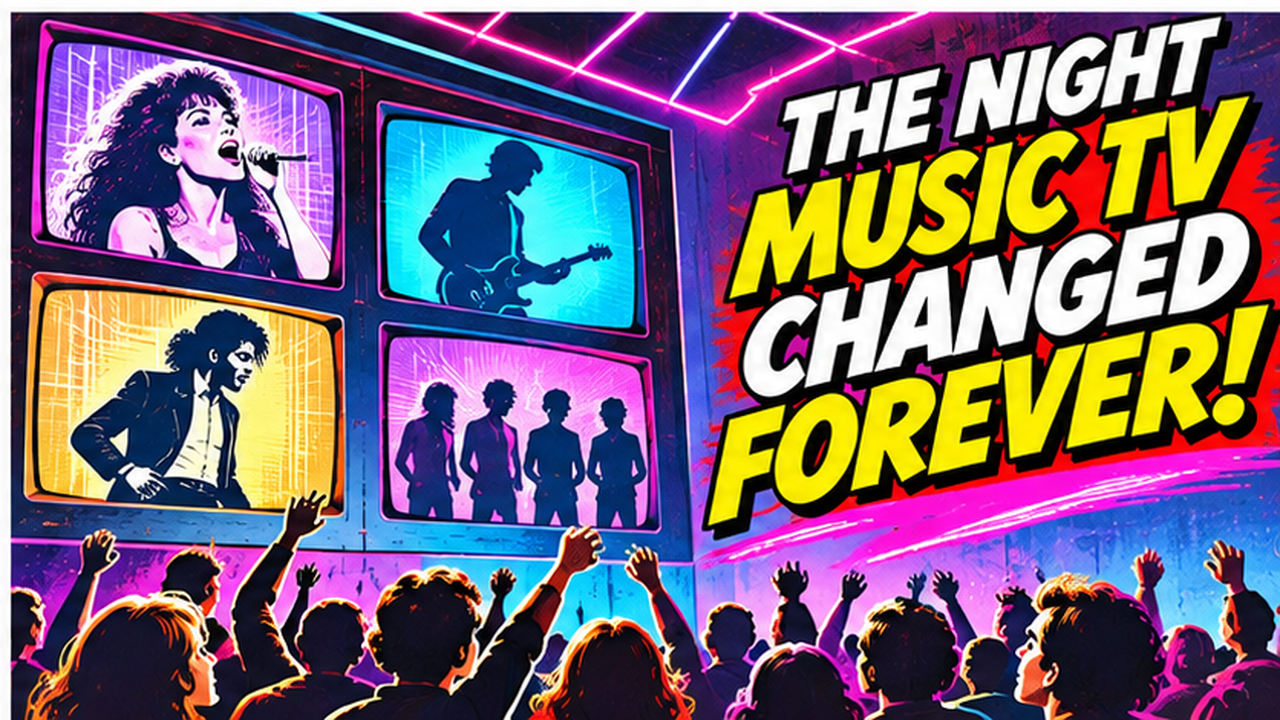
ONE CHANNEL. ONE MIDNIGHT LAUNCH. ONE PERFECTLY TITLED SONG.
On August 1, 1981, Video Killed the Radio Star became the first music video broadcast by MTV.
The recording had already been released in 1979.
But its appearance on the new channel gave it a permanent place in television history.
Watching the video today offers a glimpse into the visual imagination of the late 1970s.
Its futuristic imagery feels especially appropriate for the beginning of a new music television era.
The official music video is available through The Buggles' verified VEVO channel.
The song's title remains memorable because it captures a question that continues to appear whenever new entertainment technology arrives.
Does a new medium replace an older one?
Or does it change how audiences use both?
MTV did not eliminate radio.
Radio stations continued broadcasting popular music.
Musicians continued releasing records and performing concerts.
But MTV changed the expectations surrounding music promotion.
Fans increasingly wanted to see their favorite performers as well as hear them.
The music video became a powerful way to introduce songs, develop an artistic identity, and reach new audiences.
Decades later, online video platforms would transform music discovery again.
The technology changed.
The screens changed.
But the idea that visual storytelling could strengthen a musical performance remained important.
That is the lasting significance of MTV's first broadcast.
It was not the beginning of music videos.
It was the beginning of a new chapter in their cultural influence.
On August 1, 1981, MTV began broadcasting at 12:01 a.m. Eastern Time.
Its opening sequence featured an astronaut and a flag.
Its first music video was Video Killed the Radio Star by The Buggles.
At the time, the channel was available to only a limited number of American cable viewers.
Yet its influence would eventually extend far beyond that small audience.
MTV helped transform the way music was marketed, watched, and discussed.
It gave music videos a dedicated platform.
It helped make visual presentation an essential part of many artists' careers.
And it became one of the defining entertainment brands of the 1980s.
The first video was not the first music video ever created.
But its place in MTV history is undisputed.
A song about technological change became the soundtrack to a television revolution.
If you could travel back to August 1, 1981, would you stay up until midnight to watch MTV's first broadcast?
And which 1980s music video do you think best represents the golden age of MTV?
Share your answer in the comments.


COMMENTS (1)
Viet nhu con cac vay a