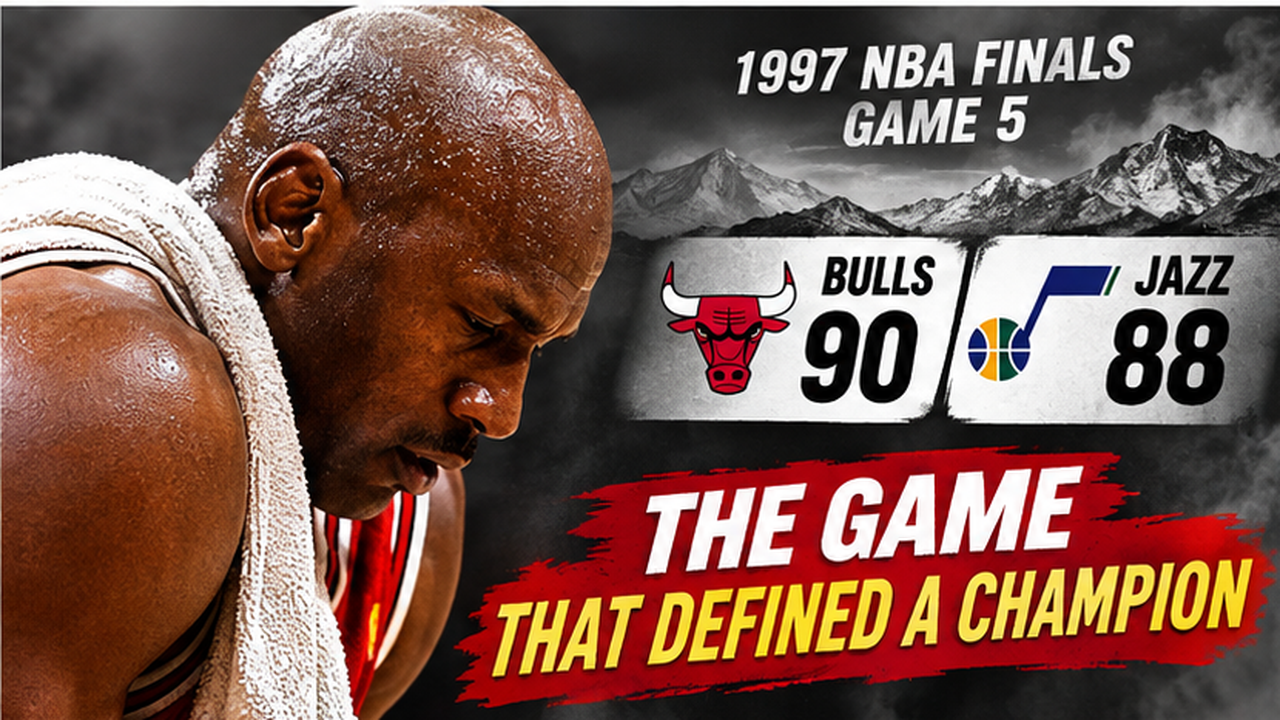
JUNE 11, 1997 — MICHAEL JORDAN COULD BARELY STAND, BUT THE CHICAGO BULLS NEEDED HIM TO WIN.
The Chicago Bulls were facing the Utah Jazz in Game 5 of the 1997 NBA Finals.

JUNE 11, 1997 — MICHAEL JORDAN COULD BARELY STAND, BUT THE CHICAGO BULLS NEEDED HIM TO WIN.
The Chicago Bulls were facing the Utah Jazz in Game 5 of the 1997 NBA Finals.
The series was tied at two games apiece.
Jordan had been seriously ill before tipoff, and there were genuine concerns about whether he could play.
Yet he stepped onto the court at the Delta Center in Salt Lake City and produced one of the most extraordinary performances of his career.
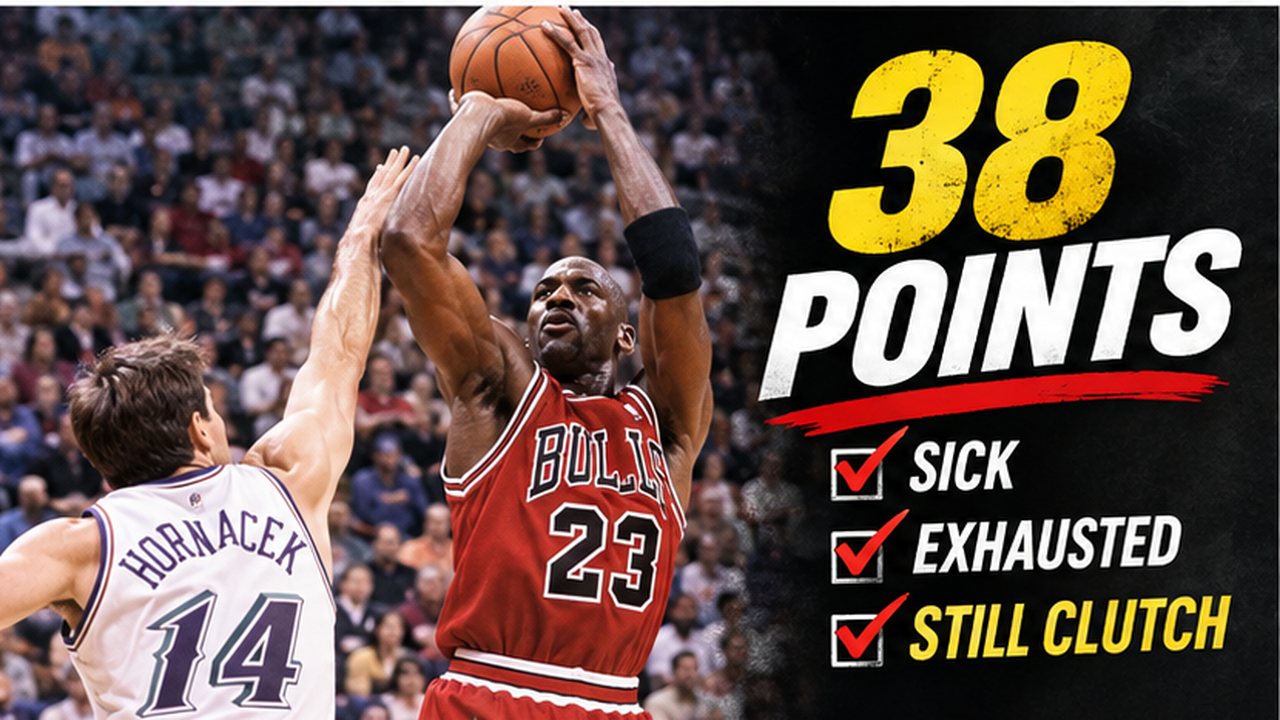
He scored 38 points in 44 minutes.
He made a crucial three-pointer in the final seconds.
And Chicago escaped with a 90–88 victory.
The game became known around the world as Michael Jordan's Flu Game.
But the real story is more complicated than the nickname suggests.
What made the night historic was not simply that Jordan played while sick.
It was the way an exhausted superstar helped change the direction of an NBA championship series.
JUNE 1997 — CHICAGO BULLS VS. UTAH JAZZ.
The Bulls entered the 1997 NBA Finals attempting to defend their championship.
Jordan was pursuing his fifth NBA title.
Chicago had won the first two games of the series at home, establishing an early advantage against Utah.
But the Jazz responded when the series moved to Salt Lake City.
Led by Karl Malone and John Stockton, Utah won Games 3 and 4.
Suddenly, the series was tied 2–2.
Game 5 would determine which team returned to Chicago with a chance to clinch the championship in Game 6.
The pressure was enormous.
Utah had momentum and home-court support.
Chicago had the experience of a defending champion.
And Jordan, the Bulls' most important offensive player, was facing a physical problem that threatened to keep him off the court entirely.
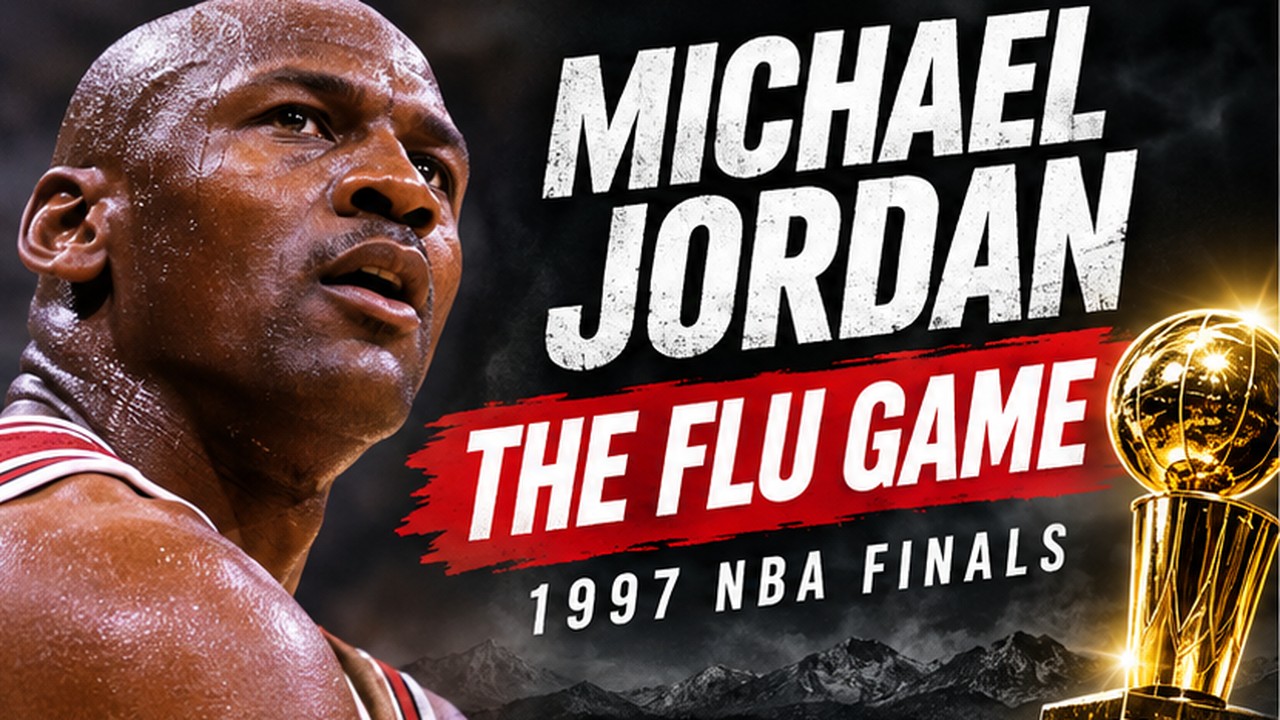
Jordan became seriously ill before Game 5.
Contemporary accounts described nausea, vomiting, weakness, and dehydration.
He was reportedly unable to participate normally in the team's preparations.
By game day, his condition was serious enough to raise doubts about whether he would play.
The illness eventually gave the performance its famous nickname.
But there is an important distinction between the name Flu Game and the actual medical explanation.
For years, the event was widely described as a case of influenza or flu-like illness.
Later accounts, including Jordan's recollections in the documentary series The Last Dance, pointed toward food poisoning after he ate pizza the previous night.
Those accounts have generated debate about what caused the illness.
The available public evidence does not establish a definitive medical diagnosis.
What is clear is that Jordan was visibly unwell and physically depleted during the game.
That fact alone created an extraordinary challenge.
The Bulls were preparing for one of their most important games of the season.
Their leading scorer was struggling to function normally.
And the championship series was hanging in the balance.
When the game began, Jordan did not look like the dominant player who had led Chicago to four previous championships.
He appeared unusually sluggish.
His movement lacked its customary energy.
Utah took advantage of Chicago's difficult start.
The Jazz established an early lead, and Jordan struggled to impose himself offensively.
For viewers watching the national television broadcast, the contrast was striking.
Jordan was famous for his conditioning, explosive movement, and ability to control games.
On this night, he was visibly fighting his own physical limitations.
The Bulls needed someone to change the momentum.
Jordan eventually found a way to respond.
And the second quarter would become the first major turning point of the game.
Despite his condition, Jordan scored 17 points in the second quarter.
It was an extraordinary burst of production from a player who had looked physically overwhelmed earlier in the game.
The scoring surge helped Chicago recover from its difficult opening period.
Jordan attacked the basket, created opportunities, and found ways to score without relying entirely on his usual athletic explosiveness.
The performance demonstrated the technical side of his game.
Even when his energy was limited, he could use positioning, timing, footwork, and shooting ability to generate offense.
But the effort came at a visible physical cost.
Between stretches of play, Jordan appeared exhausted.
The game was becoming a test of endurance as much as basketball skill.
Chicago remained within striking distance.
Utah, however, was not about to surrender its opportunity.
The Jazz entered the closing stages with an opportunity to seize the series lead.
Utah built a 77–69 advantage in the fourth quarter.
With Jordan struggling physically, the Bulls faced the possibility of returning home trailing three games to two.
But Chicago responded with a 10–0 run.
Jordan scored seven points during that stretch.
The comeback brought the Bulls back into contention.
It also set the stage for one of the most memorable closing sequences in NBA Finals history.
Jordan would finish with 15 points in the fourth quarter.
His production during the final period was especially remarkable because the symptoms of his illness had not disappeared.
He was still visibly exhausted.
Yet he continued taking responsibility for Chicago's offense.
The decisive moment was approaching.
LESS THAN 30 SECONDS REMAINED.
The Bulls trailed 85–84 when Jordan drew a foul.
He made the first free throw to tie the game.
His second attempt missed.
But Chicago recovered possession after the rebound was knocked back toward Jordan.
The sequence gave the Bulls another opportunity.
Jordan moved into position beyond the three-point line.
With approximately 25 seconds remaining, he connected on a crucial three-pointer.
Chicago moved ahead 88–85.
The Bulls eventually secured a 90–88 victory.
Jordan had completed one of the defining performances of his career.
He finished with 38 points, seven rebounds, five assists, and three steals.
He had played approximately 44 minutes despite his illness.
The numbers were remarkable.
But the images from the closing moments became just as famous.
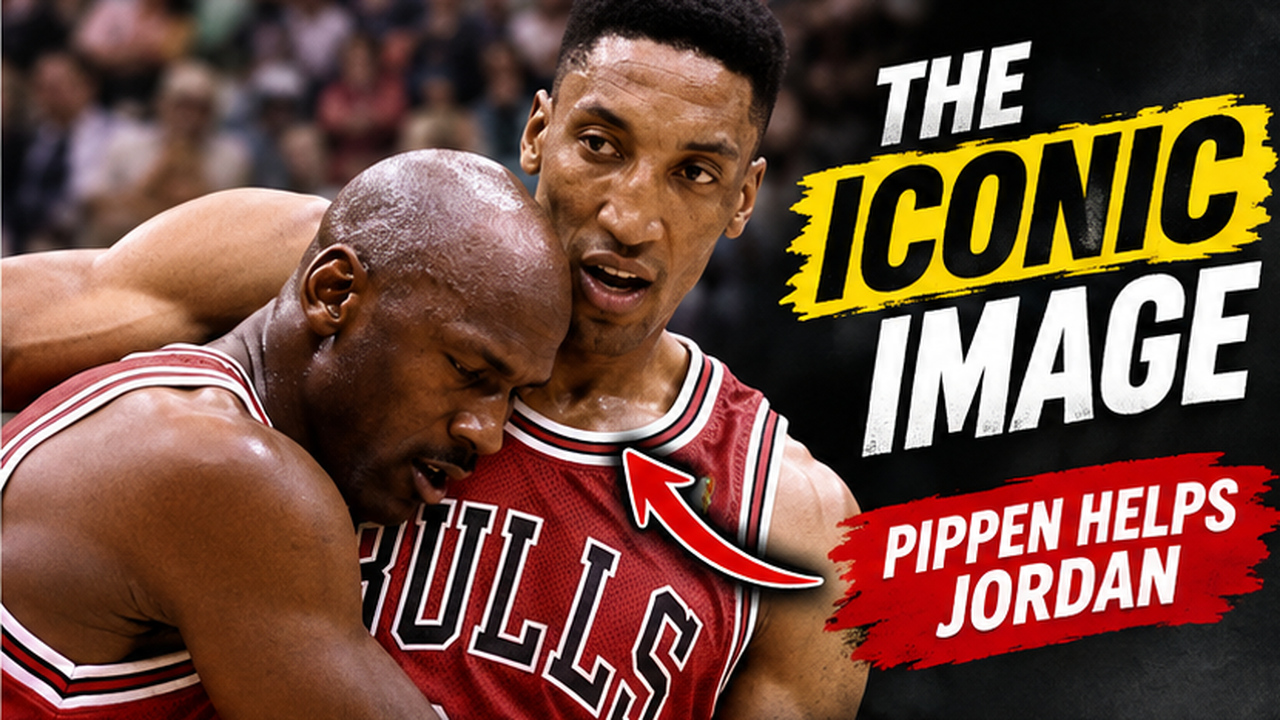
One of the most recognizable images from the 1997 NBA Finals shows Scottie Pippen supporting an exhausted Michael Jordan.
Jordan leaned heavily against his teammate as he struggled with fatigue.
The moment became an enduring symbol of the Flu Game.
It also highlighted something sometimes overlooked in stories about Jordan's individual greatness.
Chicago's championships depended on an exceptional team.
Pippen was not merely a spectator to Jordan's performance.
He was an essential contributor throughout the Bulls' championship years.
During Game 5, his presence helped Chicago withstand a difficult road contest.
The famous image of the two players together communicated the physical toll of the game more clearly than any statistic.
Jordan had delivered an extraordinary scoring performance.
But he needed help getting through the final moments.
For many fans, that contrast is what makes the scene unforgettable.
The nickname has remained unchanged for nearly three decades.
But the question surrounding Jordan's illness continues to attract attention.
Early descriptions focused on flu-like symptoms.
Later accounts emphasized the possibility of food poisoning.
Jordan himself discussed the pizza-related explanation in The Last Dance.
That recollection is part of the historical record, but it does not amount to a medically verified diagnosis.
The distinction is important because the dramatic achievement does not depend on proving exactly which illness Jordan experienced.
The official statistics confirm his performance.
The game footage shows his visible exhaustion.
Contemporary reporting documents the concern surrounding his condition.
And the result is beyond dispute.
Chicago won Game 5.
Jordan scored 38 points.
The Bulls took a 3–2 series lead.
Whether the cause was influenza, food poisoning, or another illness, the basketball accomplishment remains the same.
The victory gave Chicago a major advantage.
The series returned to the United Center for Game 6 on June 13, 1997.
The Bulls defeated the Jazz 90–86.
Steve Kerr made the decisive late jumper after receiving a pass from Jordan.
Chicago secured its fifth NBA championship in seven seasons.
Jordan was named NBA Finals Most Valuable Player.
The title also completed the second championship of the Bulls' eventual second three-peat.
The Flu Game became one of the defining episodes of Jordan's championship career.
It was not his highest-scoring NBA Finals performance.
Nor was it the only time he delivered a decisive shot under pressure.
But the combination of illness, championship stakes, late-game execution, and visible exhaustion gave the event a unique place in basketball history.
Michael Jordan's Flu Game continues to be discussed because it brings together several elements of memorable sports history.
There was a championship series tied 2–2.
There was uncertainty about whether a superstar could compete.
There was an early struggle followed by a remarkable scoring response.
There was a crucial late three-pointer.
And there was a teammate supporting an exhausted player after the effort.
Each detail is documented in the historical record.
Together, they create a story that remains compelling even for people who already know the final score.
The game also illustrates the difference between a legendary sporting achievement and a lesson that should be applied to everyday life.
Jordan's decision to play through severe illness was extraordinary, but it should not be treated as general medical advice.
For most people, serious symptoms and dehydration are reasons to seek appropriate care rather than push through strenuous physical activity.
The significance of the Flu Game lies in what happened during a particular NBA Finals contest.
It does not require turning Jordan's decision into a universal rule.
38 POINTS. ONE CRUCIAL THREE-POINTER. AN UNFORGETTABLE NBA FINALS VICTORY.
The official NBA footage captures the moments that made June 11, 1997, a historic night.
Watch Jordan's scoring bursts, the late-game comeback, and the final moments against Utah.
Pay particular attention to how his movement and body language contrast with the precision of his offensive execution.
The recording offers direct visual evidence of a performance that has been discussed for generations.
On June 11, 1997, Michael Jordan entered one of the most important games of his career while seriously unwell.
The Chicago Bulls needed a victory to regain control of the NBA Finals.
Jordan responded with 38 points and a decisive late three-pointer.
Chicago won 90–88 and went on to claim the championship two days later.
The exact cause of Jordan's illness remains debated.
The performance itself does not.
It was a defining chapter in the career of one of basketball's greatest players.
And nearly three decades later, the image of Jordan leaning on Scottie Pippen remains one of the most powerful reminders of how demanding that night became.
Do you consider the 1997 Flu Game Michael Jordan's greatest NBA Finals performance?
Share your opinion in the comments and watch the official NBA highlights below.


COMMENTS (0)
No comments yet.