FEBRUARY 9, 1964 — FOUR YOUNG MUSICIANS FROM LIVERPOOL APPEARED ON AMERICAN TELEVISION, AND AN ESTIMATED 73 MILLION PEOPLE WATCHED.
The studio audience screamed.

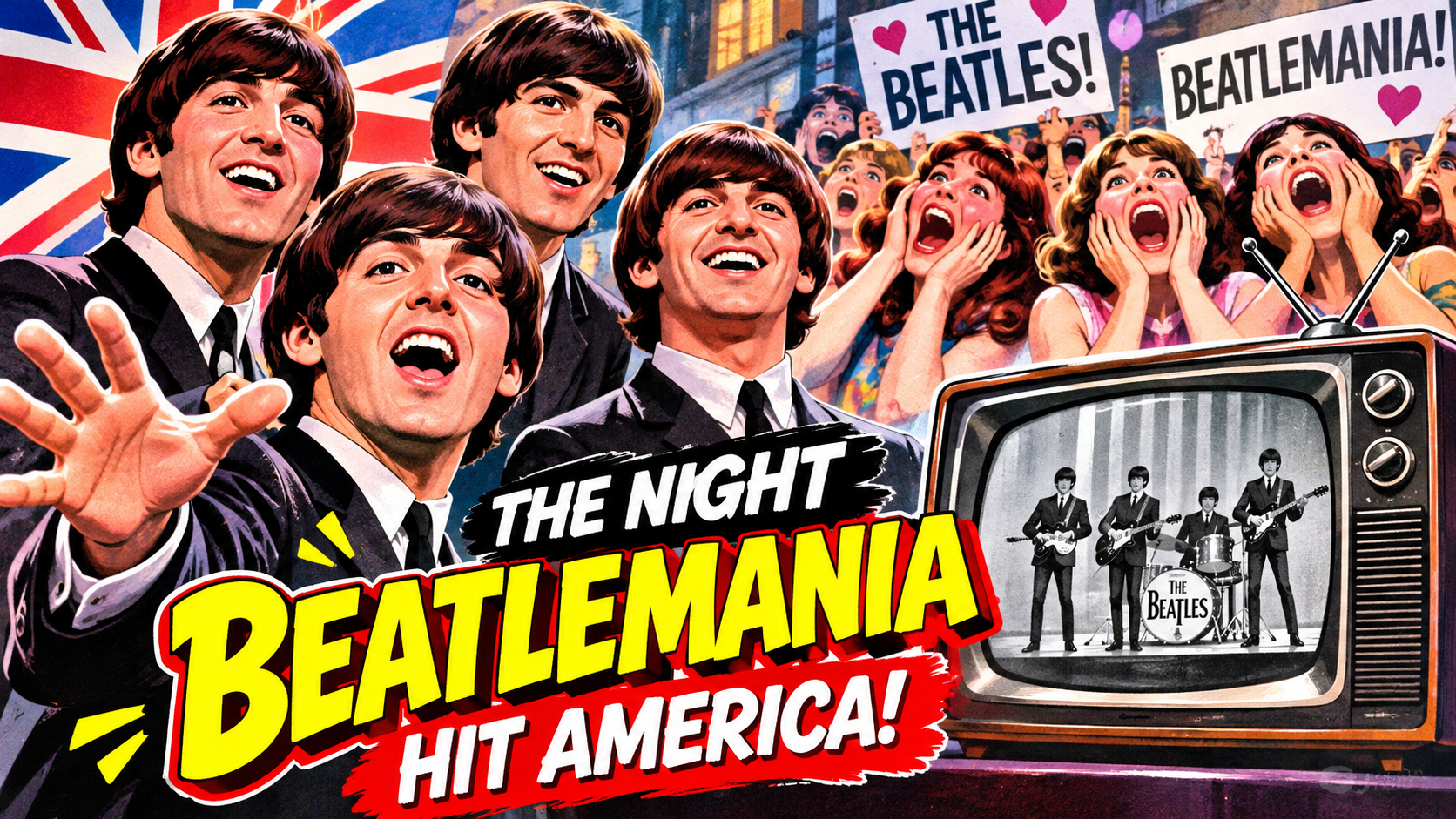
FEBRUARY 9, 1964 — FOUR YOUNG MUSICIANS FROM LIVERPOOL APPEARED ON AMERICAN TELEVISION, AND AN ESTIMATED 73 MILLION PEOPLE WATCHED.
The studio audience screamed.
Teenagers crowded around television sets.
And across the United States, families witnessed a British band that was about to become one of the biggest cultural phenomena of the twentieth century.
The musicians were John Lennon, Paul McCartney, George Harrison, and Ringo Starr.
Together, they were The Beatles.
Their appearance on The Ed Sullivan Show became a defining moment in American music history.
But Beatlemania did not begin that night.
The frenzy had already transformed Britain, and American fans were discovering the band before its first major U.S. television performance.
So what made February 9, 1964, so extraordinary?
The answer involves hit records, television, teenage culture, and four musicians who arrived at exactly the right moment.
LIVERPOOL, ENGLAND — EARLY 1960s.
The Beatles developed their sound through years of performances in Liverpool and Hamburg, Germany.
By 1963, the band had become a major attraction in Britain.
Songs such as Please Please Me, She Loves You, and I Want to Hold Your Hand helped establish their commercial success.
Their concerts also generated increasingly intense audience reactions.
Fans gathered outside venues, shouted during performances, and followed news of the band obsessively.
The British press popularized the term Beatlemania to describe the phenomenon.
It captured something larger than ordinary musical popularity.
For many young fans, The Beatles represented excitement, humor, fashion, and a sense of generational identity.
Their distinctive hairstyles and matching suits were almost as recognizable as their songs.
By the end of 1963, the group had become a sensation at home.
The next challenge was America.
And success across the Atlantic was far from guaranteed.
Before The Beatles appeared on The Ed Sullivan Show, their records were already gaining momentum in the United States.
The most important early breakthrough was I Want to Hold Your Hand.
American radio stations began playing the song as demand for the band increased.
Capitol Records accelerated its release plans in response to the growing interest.
By early February 1964, the single had reached the top of the Billboard Hot 100.
This meant that The Beatles did not arrive in America as complete unknowns.
Their music had already created anticipation.
Radio helped establish the band's popularity.
Television would make their personalities and appearance familiar to millions more.
That combination proved exceptionally powerful.
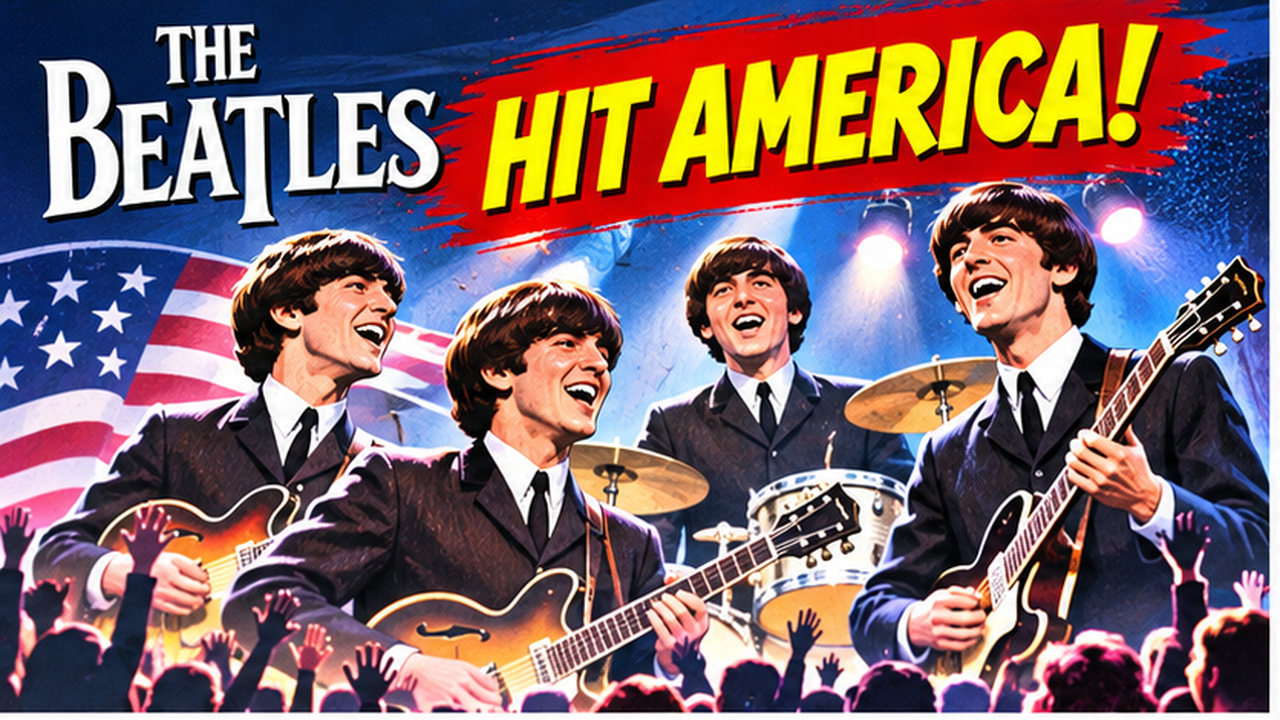
Caption: The Beatles arrived in New York on February 7, 1964, as American excitement about the band was rapidly growing.
The Beatles landed at John F. Kennedy International Airport in New York City on February 7, 1964.
Thousands of excited fans gathered to welcome them.
Reporters surrounded the band, eager to capture the personalities behind the increasingly popular records.
The musicians responded to questions with humor.
Their playful exchanges helped establish an image that was very different from the serious, distant celebrity persona some audiences expected.
The airport scenes became an important part of the band's American story.
Here were four young British musicians, arriving in a country where they had never previously toured.
Yet they were greeted like established superstars.
The band stayed at the Plaza Hotel in Manhattan.
Fans gathered outside, hoping for even a brief glimpse of the musicians.
Meanwhile, demand for tickets to their upcoming television appearance became overwhelming.
The stage was set for a broadcast that would become a landmark in entertainment history.
SUNDAY, FEBRUARY 9, 1964 — CBS STUDIO 50, NEW YORK CITY.
The Ed Sullivan Show was one of America's most influential television variety programs.
It introduced audiences to singers, comedians, dancers, and other entertainers.
A successful appearance could bring an artist into millions of homes.
But the level of anticipation surrounding The Beatles was exceptional.
According to The Beatles' official website and the Ed Sullivan organization, an estimated 73 million viewers watched the broadcast.
The program reached more than 23 million American households.
Those numbers made the appearance a remarkable television event for its era.
The Beatles performed in front of a studio audience that reacted enthusiastically from the beginning.
The screams were impossible to ignore.
Yet the performance itself was musically straightforward.
The band played its instruments, sang its songs, and let the audience respond.
There were no giant video screens or elaborate digital effects.
The excitement came from the musicians, their songs, and the audience's extraordinary anticipation.
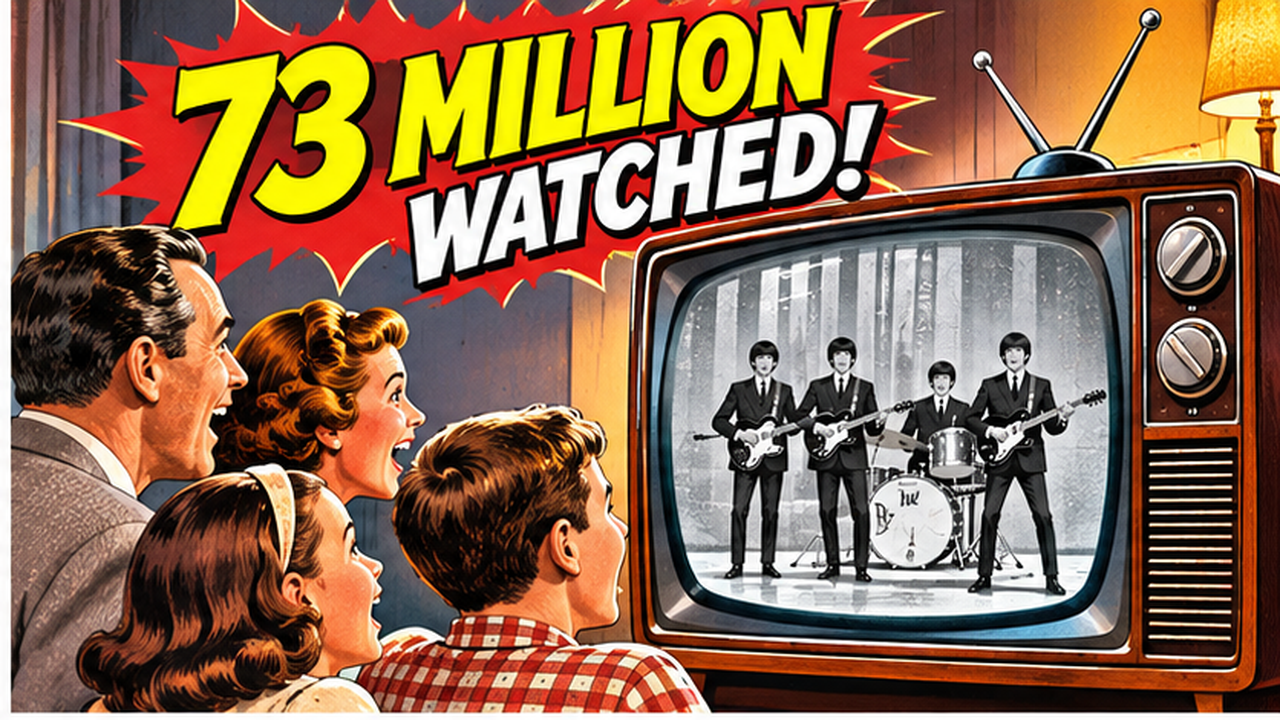
Caption: An estimated 73 million viewers watched The Beatles' first live appearance on The Ed Sullivan Show on February 9, 1964.
The Beatles performed five songs during the February 9 broadcast.
Their first segment featured All My Loving, Till There Was You, and She Loves You.
Later in the program, they returned to perform I Saw Her Standing There and I Want to Hold Your Hand.
The selection demonstrated different sides of the group.
All My Loving offered energetic pop songwriting and tight vocal harmonies.
Till There Was You, a song from the musical The Music Man, showed their ability to perform gentler material.
She Loves You delivered the exuberant sound that had helped establish Beatlemania in Britain.
The closing songs reinforced the band's rock-and-roll energy.
For American viewers, the performance offered an introduction to four distinct personalities working together as a group.
Lennon and Harrison played guitars.
McCartney played bass.
Starr played drums.
Their coordinated performance and recognizable sound made the band immediately accessible to a national audience.
The famous television appearance was not one continuous five-song set.
The songs were divided between two appearances within the same broadcast.
That distinction is sometimes lost in short online clips.
Beatlemania is often remembered through images of screaming teenage girls.
Those reactions were real.
But reducing the phenomenon to hysteria misses the broader cultural story.
The Beatles arrived at a time when teenagers were becoming an increasingly influential audience for music, fashion, and entertainment.
Popular records gave young listeners shared experiences.
Radio allowed them to follow their favorite performers.
Television brought musicians into their homes.
Fan magazines and newspapers supplied photographs, interviews, and stories.
The Beatles also offered an appealing combination of musical energy and humor.
Their songs were memorable.
Their public appearances were playful.
And their image was different enough to attract attention without being completely unfamiliar.
For many fans, supporting The Beatles became a way to participate in a larger cultural moment.
The screaming was one visible expression of that enthusiasm.
It was not the whole story.
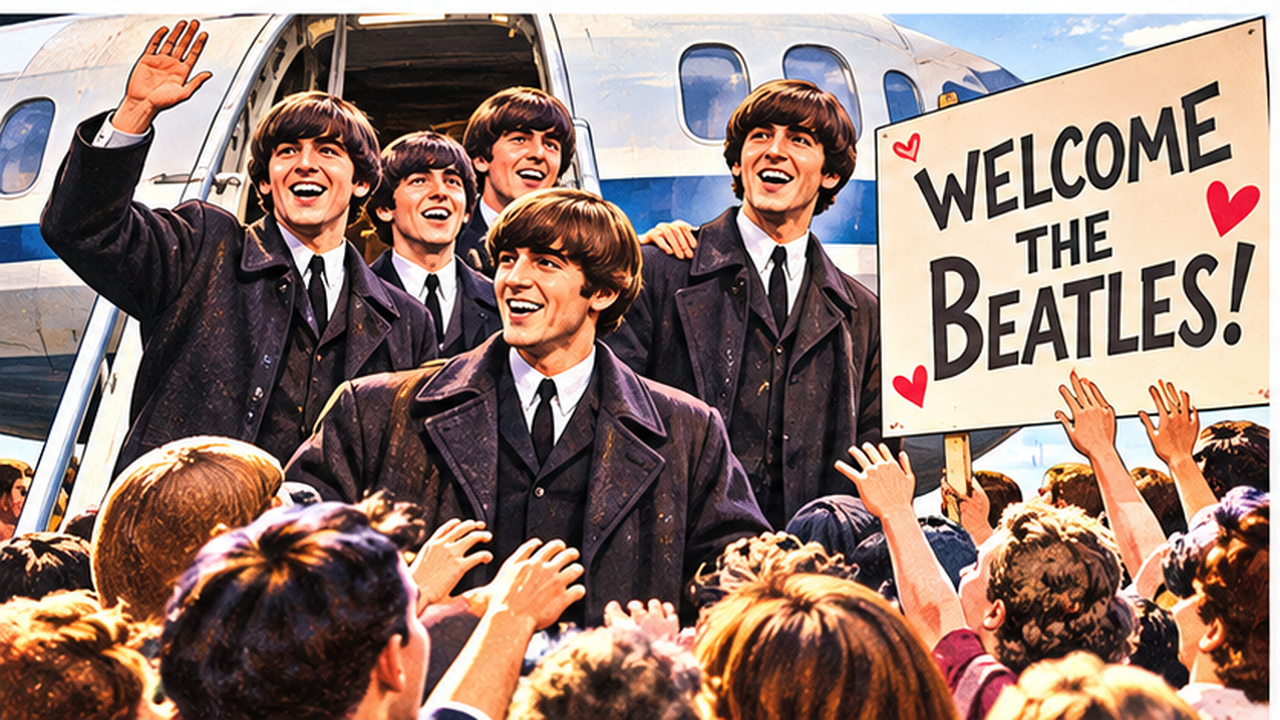
Caption: Beatlemania reflected the growing influence of teenage music fans during the 1960s.
The February 9 appearance became a powerful symbol of change.
But cultural transformations rarely happen in a single evening.
American audiences had already encountered British performers before The Beatles arrived.
Rock and roll also had deep American roots.
Artists such as Chuck Berry, Little Richard, Buddy Holly, and Elvis Presley had influenced The Beatles' musical development.
The band's success built on that existing history.
What made their American breakthrough so significant was its extraordinary scale.
The Beatles combined major record sales, national television exposure, intense fan enthusiasm, and a distinctive group identity.
Their popularity helped open doors for other British acts.
Groups including The Rolling Stones, The Dave Clark Five, and The Animals would become part of the wider British Invasion.
The Beatles were not responsible for every musical change that followed.
But their success became one of the clearest signs that American popular music was entering a new era.
The historic February 9 appearance was not the band's only performance on the program.
The Beatles appeared again on February 16, 1964, in a broadcast from Miami Beach.
A third appearance aired on February 23.
That program had been recorded earlier in New York.
The band returned to the show in 1965, performing additional songs as its musical career continued to develop.
These appearances helped sustain the connection between The Beatles and American television audiences.
They also demonstrated that the band's initial success was not limited to one sensational evening.
Over the following years, The Beatles continued releasing influential recordings and experimenting with new musical styles.
Their career would extend far beyond the matching suits and early love songs of 1964.
Yet the first Ed Sullivan appearance remained a defining image of their arrival in America.
The Beatles' American breakthrough influenced more than record sales.
It changed expectations about what a rock band could achieve.
The group's success demonstrated the international potential of popular music.
It also encouraged young musicians to form bands, write songs, and imagine performing for enormous audiences.
Their music continued evolving through albums such as Rubber Soul, Revolver, Sgt. Pepper's Lonely Hearts Club Band, and Abbey Road.
Those later recordings would establish different milestones in the band's artistic history.
But Beatlemania remained the starting point for many American listeners.
For people who watched the 1964 television broadcast, the memory was often tied to the experience of seeing four musicians generate an extraordinary reaction.
For later generations, the surviving footage offers a direct connection to that moment.
The images are black and white.
The stage is relatively simple.
And the performance lasts only a few minutes.
Yet the excitement remains unmistakable.
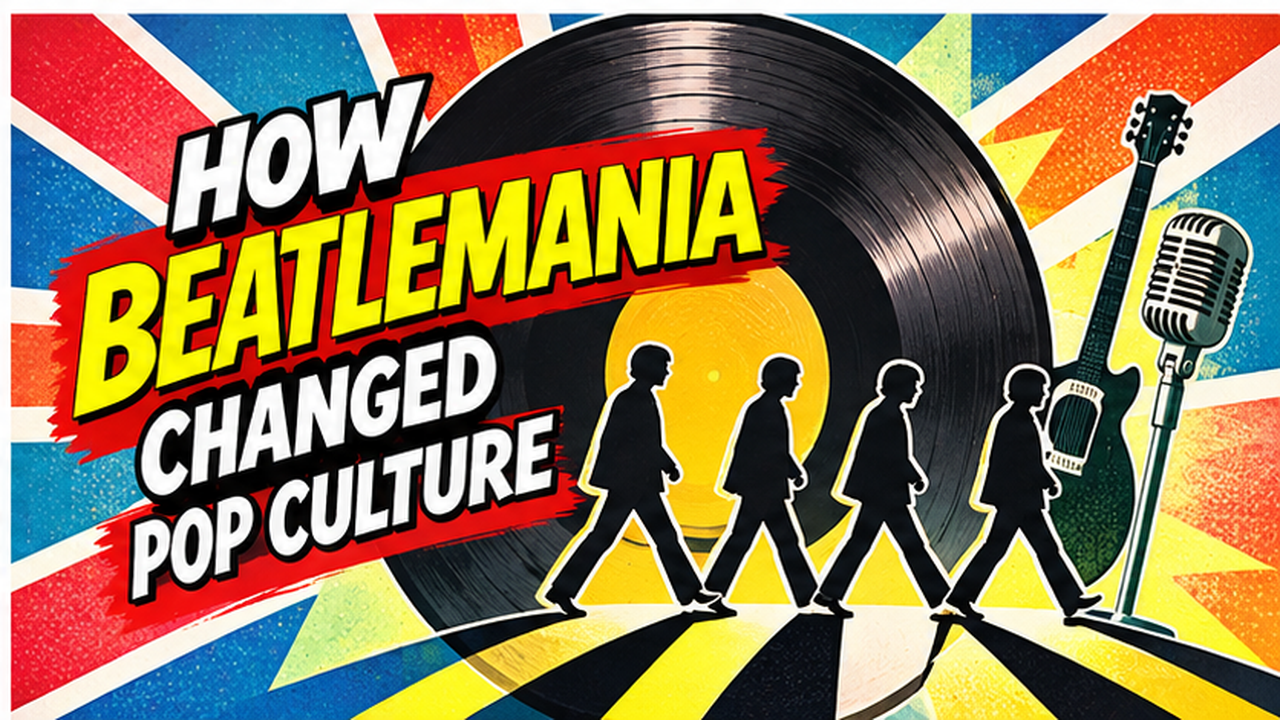
Caption: The Beatles' 1964 television debut became a lasting symbol of Beatlemania and the British Invasion.
The Beatles' appearance on The Ed Sullivan Show is often described as a moment that changed music history.
That reputation is supported by the scale of the broadcast and the cultural developments that followed.
But its significance becomes clearer when viewed in context.
The band had already built a passionate audience in Britain.
American radio had helped turn I Want to Hold Your Hand into a major hit.
Their arrival in New York generated extraordinary media attention.
And the television broadcast brought their music and personalities to an estimated 73 million viewers.
These events reinforced one another.
The Ed Sullivan performance did not create Beatlemania from nothing.
It transformed an already growing phenomenon into a shared national television experience.
That is what made the evening so powerful.
Millions of people were watching the same musicians at the same time.
And many would remember the experience for the rest of their lives.
FOUR MUSICIANS. FIVE SONGS. AN ESTIMATED 73 MILLION VIEWERS.
To understand why Beatlemania became such a phenomenon, the original television footage is essential.
Watch how the band performs I Want to Hold Your Hand on The Ed Sullivan Show.
Notice the relatively simple stage arrangement, the coordinated musicianship, and the audience's enthusiastic response.
The performance captures a moment when British pop music was becoming a major force in American culture.
On February 9, 1964, John Lennon, Paul McCartney, George Harrison, and Ringo Starr appeared on American television before an audience of extraordinary size.
They performed songs that were already attracting attention.
But the broadcast made their faces, personalities, and music familiar to millions more people.
Beatlemania had crossed the Atlantic.
The British Invasion was gathering momentum.
And the relationship between rock music, television, and teenage culture would never look quite the same.
The Beatles' influence cannot be reduced to one performance.
Yet that Sunday evening remains one of the most recognizable starting points in the story of their American success.
If you could travel back to February 9, 1964, which Beatles song would you most want to hear live?
Would it be She Loves You, All My Loving, or I Want to Hold Your Hand?
Share your favorite Beatles moment in the comments.
COMMENTS (0)
No comments yet.