A tiny piece of cardboard can sometimes be worth more than a luxury mansion.
That sounds impossible until you enter the extraordinary world of rare baseball cards.

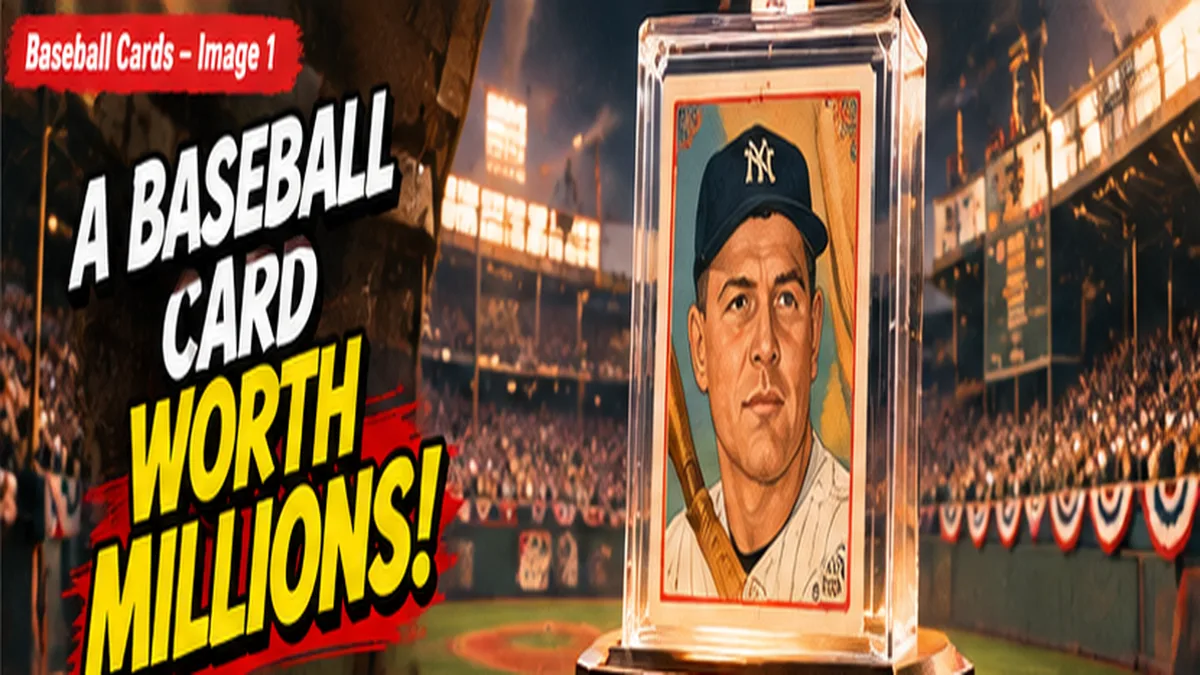
A tiny piece of cardboard can sometimes be worth more than a luxury mansion.
That sounds impossible until you enter the extraordinary world of rare baseball cards.
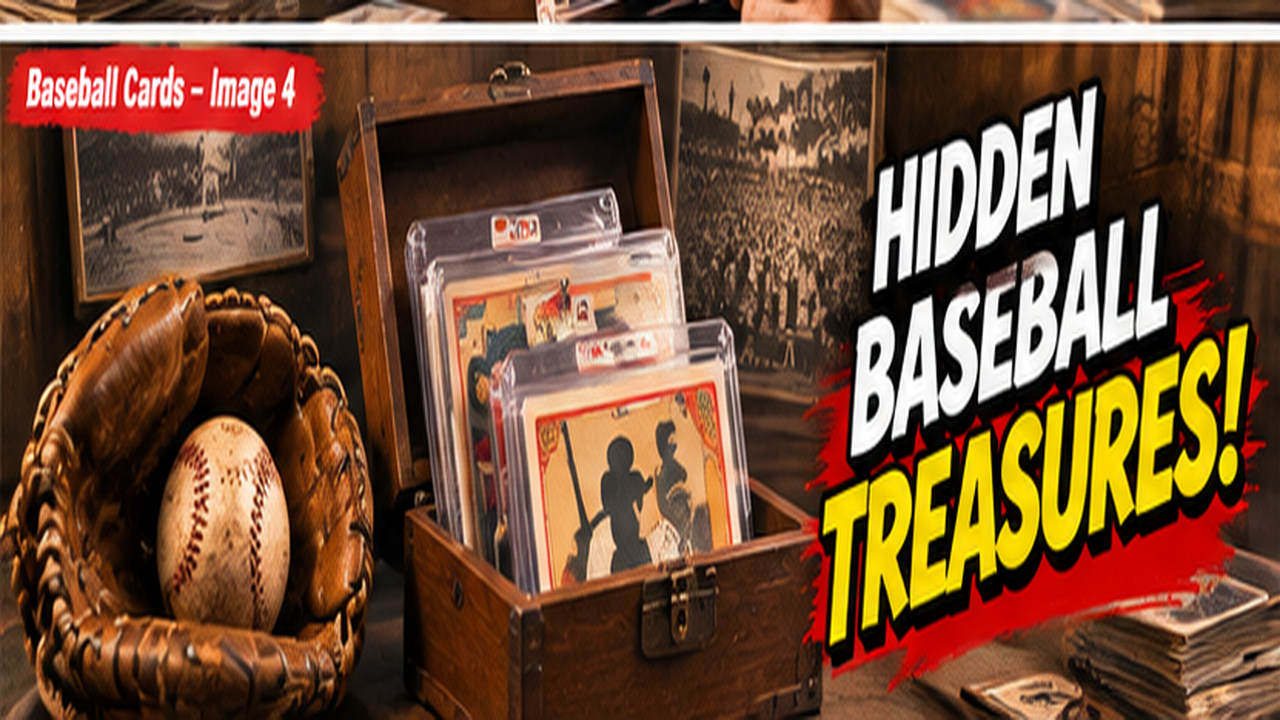
For generations, Americans have collected cards featuring their favorite players.
Some were tucked into shoeboxes.
Others were traded between school friends.
A few survived for decades in remarkably good condition.
Today, the rarest examples can sell for millions of dollars.
But what makes one baseball card worth a fortune while another is worth only a few cents?
The answer involves baseball history, scarcity, condition, authenticity, and the stories attached to legendary players.
Let's explore the most valuable baseball cards and the fascinating market behind them.
One of the most famous baseball card sales occurred in August 2022.
A 1952 Topps Mickey Mantle card sold through Heritage Auctions for approximately $12.6 million, including the buyer's premium.
The result established a record for a sports collectible at the time.
Mantle was one of the most celebrated players in New York Yankees history.
His career included seven World Series championships, three American League Most Valuable Player awards, and induction into the Baseball Hall of Fame.
But the extraordinary value of his 1952 Topps card involves more than his achievements on the field.
The card belongs to one of the most iconic sets in American collecting history.
It is also famous for its striking portrait and limited availability in top condition.
The record-setting example was graded SGC 9.5, indicating exceptional preservation.
For collectors, the combination of an iconic player, a legendary set, and outstanding condition created something extraordinary.
The card became more than a collectible.
It became a piece of American cultural history.
.
Long before Mickey Mantle cards became headline-making collectibles, another baseball legend dominated the hobby.
Honus Wagner played most of his major league career with the Pittsburgh Pirates.
He was one of baseball's greatest early stars.
Today, his T206 card is among the most recognizable collectibles ever produced.
The card dates to the early twentieth century and is famous for its extreme scarcity.
Only a relatively small number of authentic examples are known to survive.
Why so few were distributed remains a subject of historical debate.
One popular explanation involves Wagner's objection to tobacco advertising.
However, collectors and historians have discussed multiple possible reasons, and the exact circumstances should not be treated as conclusively established.
In August 2021, an example of the T206 Honus Wagner card sold for $6.606 million through Robert Edward Auctions.
The result demonstrated that collectors were willing to pay enormous sums for a historically important card even when its condition was far from perfect.
Rarity and historical significance can sometimes outweigh visual perfection.
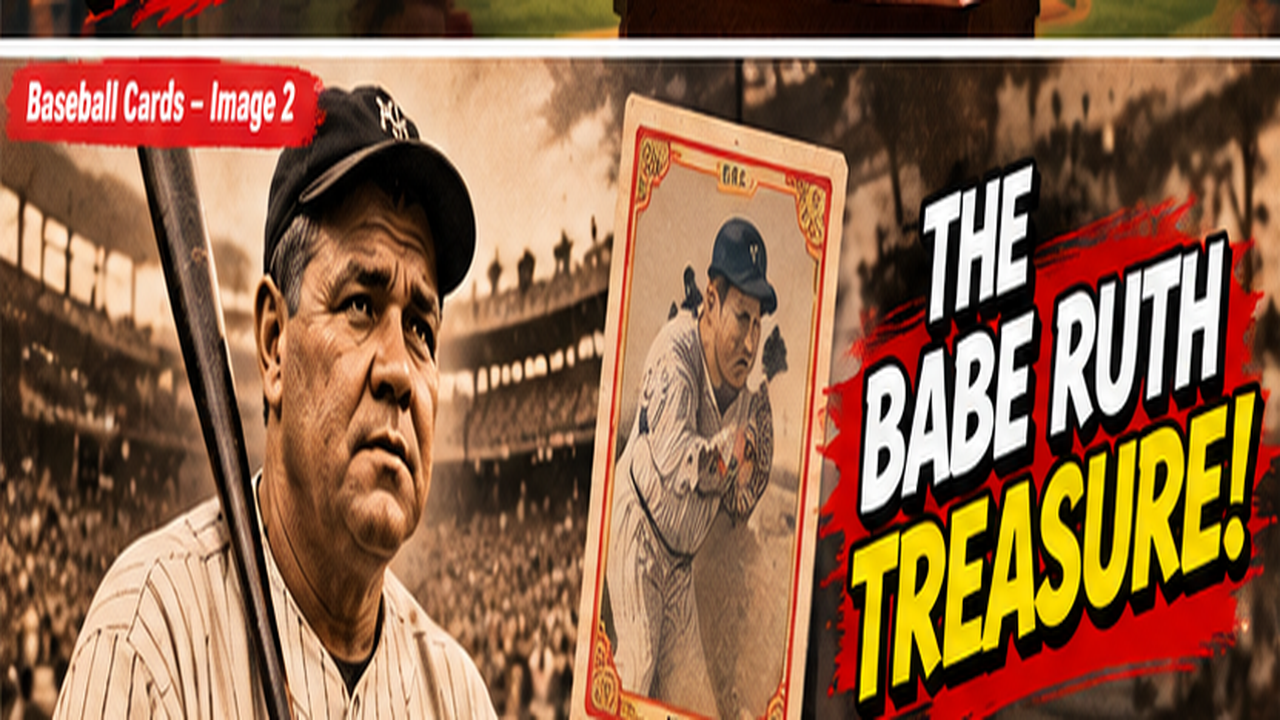
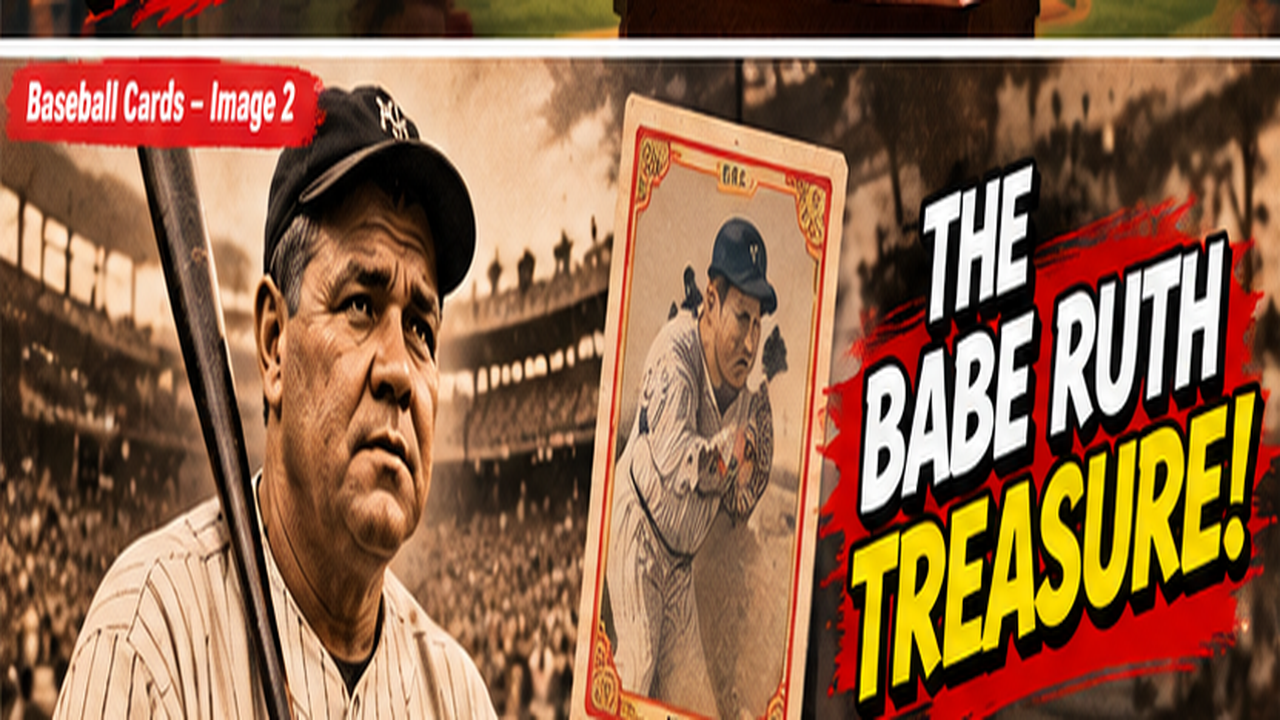
Babe Ruth remains one of the most recognizable names in American sports history.
His transformation from a star pitcher into a legendary home-run hitter helped reshape professional baseball.
Collectors prize memorabilia connected to his early career, particularly items from his years before becoming a New York Yankees icon.
One notable example is the 1914 Baltimore News card featuring Ruth as a young player with the minor-league Baltimore Orioles.
In December 2023, an example sold for approximately $7.2 million at auction.
The card is exceptionally rare.
It also captures Ruth before the fame and records that would make him a household name.
That historical connection is a major part of its appeal.
Collectors are not simply purchasing a picture.
They are acquiring a surviving artifact from the beginning of one of baseball's greatest careers.
Imagine finding two copies of the same baseball card.
Both feature the same player.
Both were printed in the same year.
But one has sharp corners and vibrant colors.
The other has creases, fading, and damaged edges.
Their values may be dramatically different.
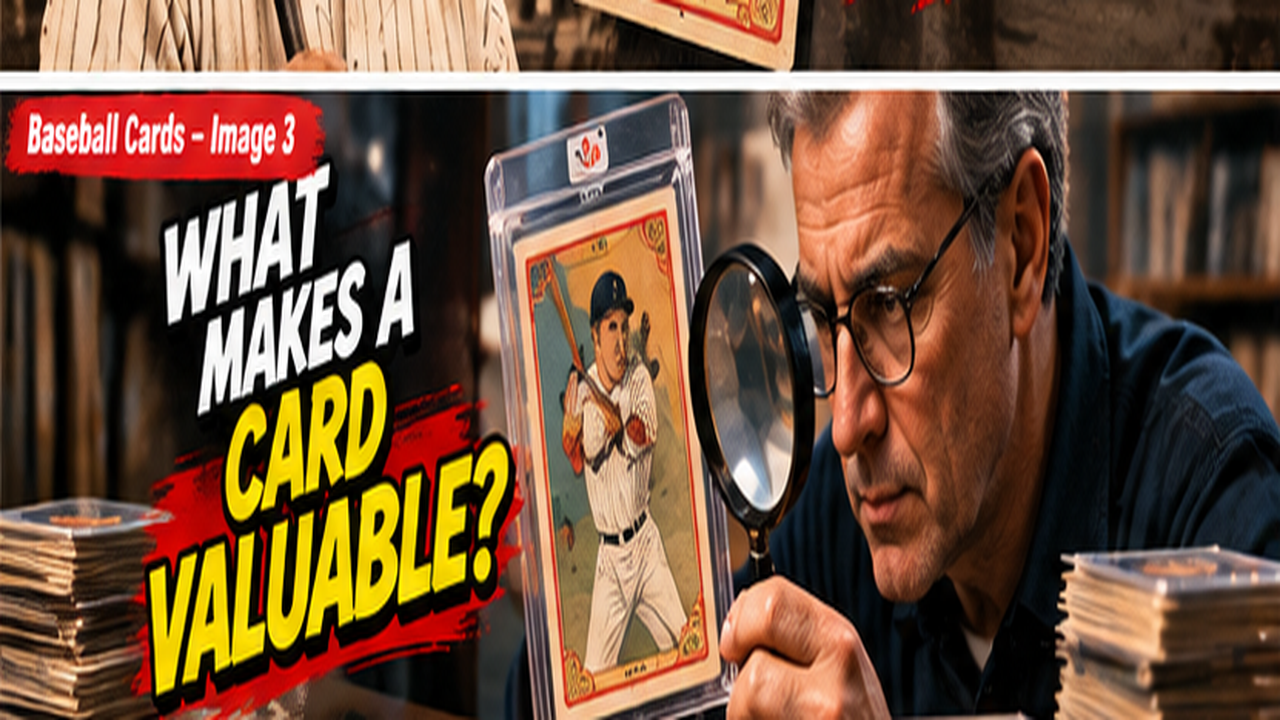
Professional grading companies evaluate collectible cards using established condition standards.
Major grading services include PSA, SGC, and Beckett.
Factors such as centering, corners, edges, surface quality, and evidence of alteration can affect a card's grade.
A higher grade can be particularly valuable when very few examples of that card survive in comparable condition.
Collectors often refer to population reports to understand how many cards have received specific grades.
However, grading populations are not necessarily a perfect count of all surviving cards.
Some cards remain ungraded, while resubmissions and changes in grading records can complicate comparisons.
Condition matters.
But it is only one part of the story.
A common misconception is that every old baseball card must be valuable.
That is not true.
Many older cards were produced in substantial quantities.
Others feature players who attract relatively little collector demand.
Some cards have survived in large numbers.
A card's age alone does not guarantee a high price.
Collectors usually consider several factors together.
These include the player's importance, the card's scarcity, its historical significance, condition, and current demand.
An exceptionally rare card featuring a legendary player can command an enormous premium.
A more common card from the same era might sell for much less.
The difference can be surprising.
That is why careful identification matters before assuming an old collection contains a fortune.
The most expensive baseball cards are not limited to the early twentieth century.
Modern collecting includes autograph cards, limited-edition parallels, and cards containing pieces of game-used memorabilia.
Some cards are individually numbered.
Others are produced in extremely small quantities.
Modern collectors often focus on rookie cards and unique examples associated with superstar players.
But scarcity alone is not enough.
A card can be rare without having strong long-term demand.
Player performance, collector interest, authenticity, and market conditions all affect prices.
Modern card values can also change quickly.
A player's breakout season may attract attention.
An injury or decline in performance may change expectations.
Unlike a museum-quality historical rarity, a modern collectible may be closely tied to an athlete's ongoing career.
If you discover an old baseball card collection, the first step is not to assume every card should be professionally graded.
Begin by identifying the player, year, manufacturer, and specific card variation.
Look for a card number and any identifying information on the back.
Then compare the card with reliable reference images.
Be cautious about altered, counterfeit, or misidentified cards.
For valuable-looking examples, professional authentication may be appropriate.
When researching prices, focus on verified completed sales rather than asking prices.
Someone can list a card online for an enormous amount without ever finding a buyer.
A completed auction result provides stronger evidence of what a collector actually paid.
Even then, the condition and specific version must match closely.
A damaged example of a rare card should not automatically be valued like a pristine one.
Baseball cards began as relatively inexpensive promotional and entertainment items.
Over time, they became objects of nostalgia.
They reminded collectors of childhood.
They preserved images of legendary players.
And they connected generations through a shared love of baseball.
As the hobby developed, specialized dealers, auctions, grading services, and collector communities created a more sophisticated marketplace.
High-profile sales attracted additional attention.
Rare cards began appearing in financial and mainstream news coverage.
Some buyers viewed them as alternative collectibles with potential investment value.
But baseball cards are not guaranteed investments.
Prices can fluctuate significantly.
Auction fees, authentication costs, storage, insurance, and liquidity all matter.
A valuable card may also be difficult to sell quickly at a desired price.
For many enthusiasts, the most meaningful reason to collect remains enjoyment rather than financial return.
A multimillion-dollar baseball card represents more than paper and ink.
The Mickey Mantle card recalls the Yankees' golden era.
The Honus Wagner card connects collectors with baseball's early decades.
The Babe Ruth card captures the beginning of a legendary career.
Each tells a different story.
And those stories help explain why collectors are willing to compete for them.
The value comes partly from rarity.
It also comes from the emotional and historical significance attached to the player.
A card can become a tangible connection to a moment that can never be repeated.
For a deeper look at major baseball-card auction results, visit the archives of established auction houses.
Heritage Auctions has published information about the record-setting 1952 Mickey Mantle sale.
Robert Edward Auctions maintains historical material about important baseball collectibles, including the T206 Honus Wagner.
Major auction archives can also help readers understand the differences between individual card examples.
Before relying on any reported price, check the auction date, grading details, and whether buyer's premium is included.
The most valuable baseball cards prove that remarkable historical artifacts can come in surprisingly small packages.
A card once treated as an inexpensive collectible can become a multimillion-dollar treasure.
But the greatest examples are not valuable simply because they are old.
They combine legendary athletes, scarcity, historical importance, and collector demand.
Whether you collect for nostalgia, baseball history, or the excitement of discovering something rare, the hobby offers endless stories.
And somewhere, another forgotten collection may still be waiting to be rediscovered.
If you could own one legendary baseball card, would you choose Mickey Mantle, Honus Wagner, or Babe Ruth?
Tell us in the comments.


COMMENTS (0)
No comments yet.